Articles on Akiya Lab | Roopt (Makigumi)
Makigumi, which operates Roopt, constantly researches case studies and other information on the revitalization of vacant houses and publishes them as columns.
We will discuss the changes in demographics in Japan and rural areas, and lifestyles after COVID-19, which are essential to understand first when evaluating real estate.
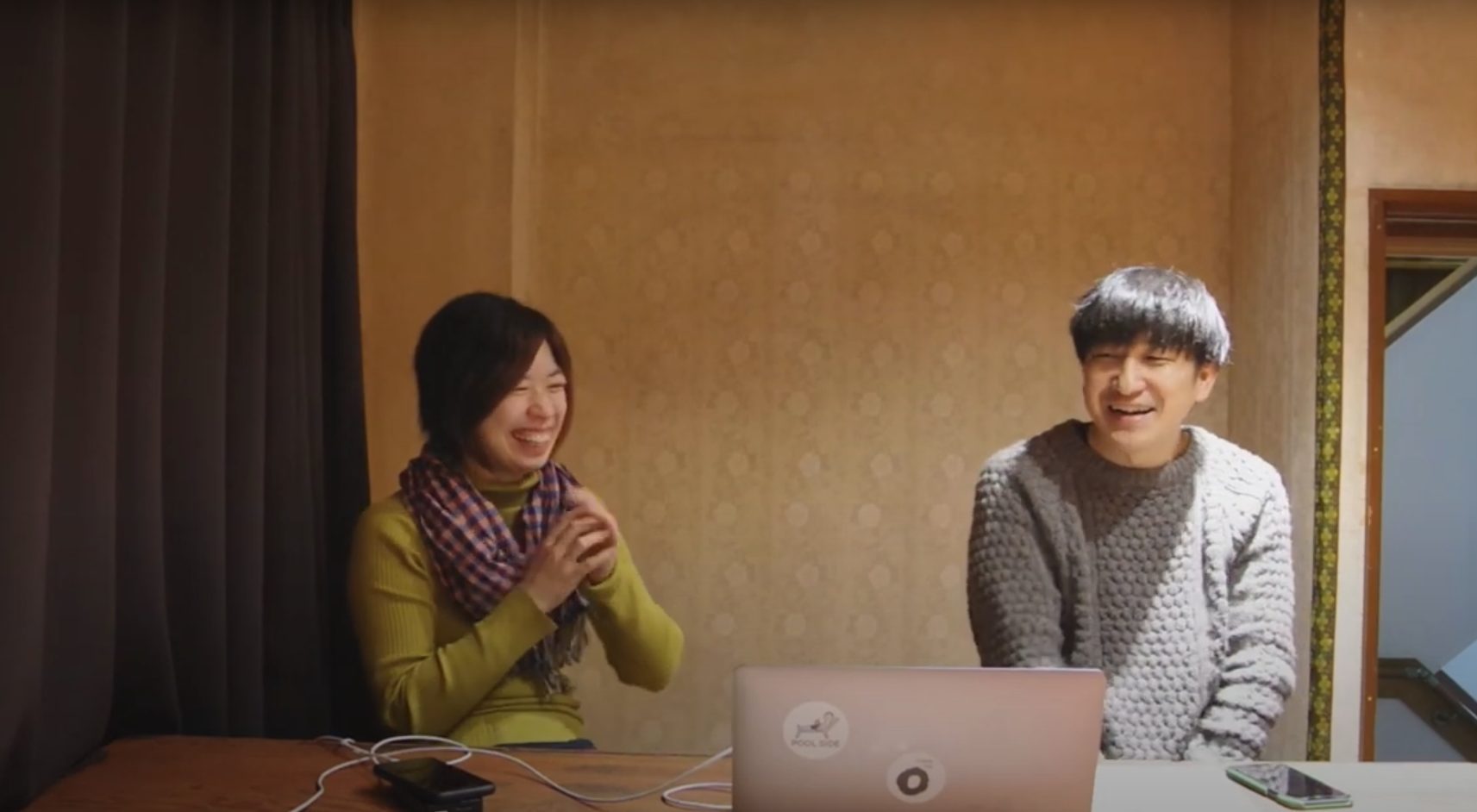
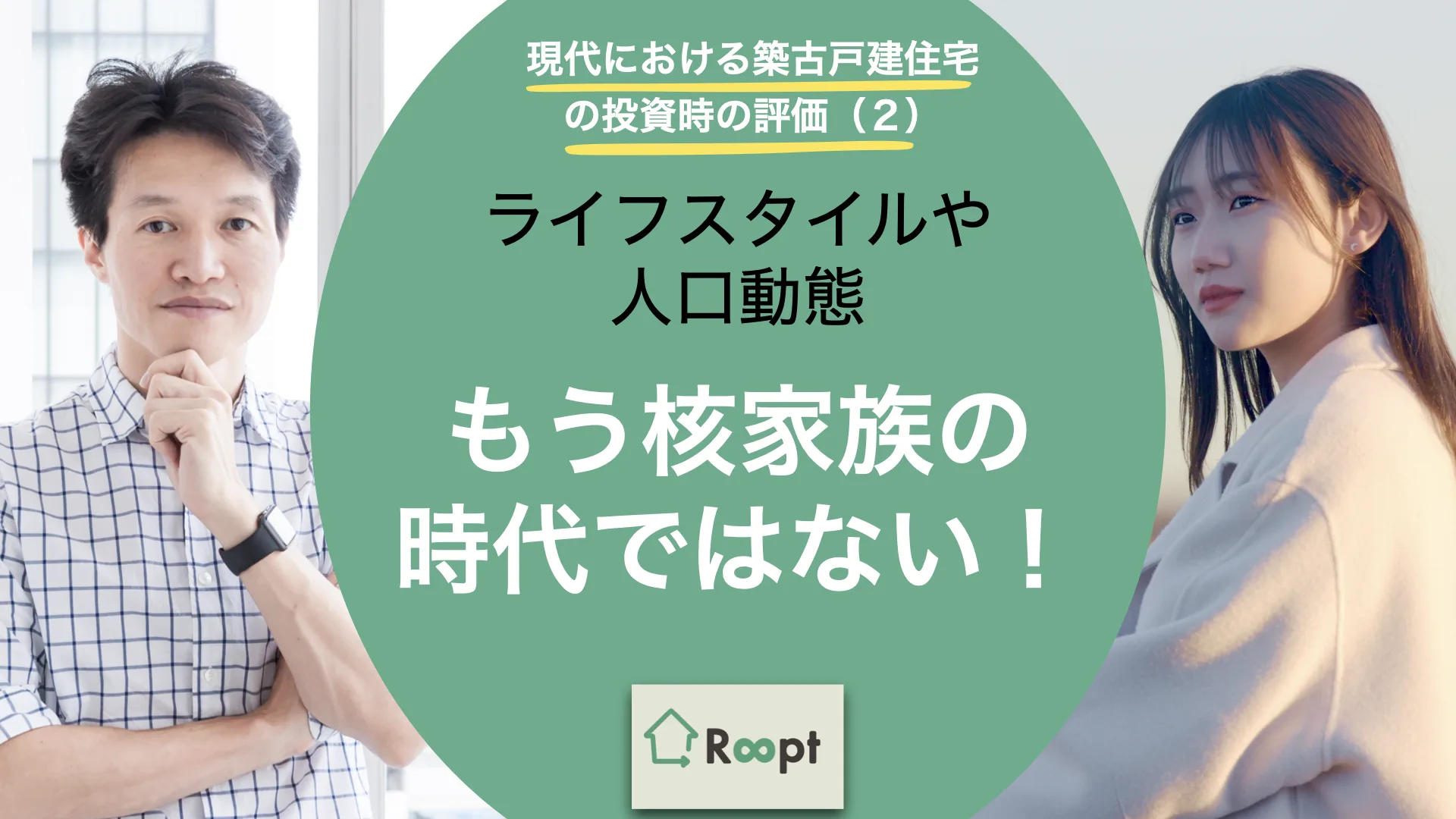
Noi: Hello everyone, I'm Noi, the host of this channel. In this video, we will be talking to Mr. Ueda, the Representative Executive Officer and President of Gaiax, about evaluating investment in old detached houses in modern times.
Ueda: Nice to meet you.
Noi: This time, over several sessions, we will discuss the current social situation in four topics to create future models. The first is lifestyles and demographics, the second is workation and remote work, the third is the sharing economy, and the fourth is the evolution of technology. This time, we will focus on lifestyles and demographics.
Ueda: Regarding how to evaluate real estate, or old detached houses, in modern times, lifestyles have truly changed compared to 10, 20, or even 30 or 40 years ago. To put it simply, the lending attitude of financial institutions hasn't changed that much, which is the reality. I'd like to talk a little about how lifestyles have changed, which is really obvious.
First of all, even before lifestyles, the number of people living is decreasing, and in addition to that, considering what kind of people are living, the active age group is steadily decreasing.
This is from the Ministry of Health, Labour and Welfare's website, an older article, showing the projection of the working-age population from around 2015 onwards. This working-age segment will continue to decrease.
This is a place called Taketa City. I passed through it once when I visited Oita. It's a pretty ordinary rural town, but as of 2020, the population aged 15 to 64 was 8,675 people. As the population itself decreases, and this composition ratio also decreases, there's a double impact, and in just 25 years, the population aged 15 to 64 is projected to almost halve. I think this is the reality in rural areas.
A decrease in population is a significant negative for property utilization. It's obvious, but if there are no people, even a brand new, sparkling property will have no one to use it, ultimately generating no yield and making it impossible to evaluate as collateral. So, while everyone is probably concerned about demographics, I believe it's something we must continue to pay attention to in the future.
Therefore, we also need to consider where the population will gather, but let's put that aside for now. Given the people who are there, what kind of lifestyle do they have? To talk a little about that, in the past, people would marry and live as a family of three or four. This was the so-called nuclear family, but unfortunately, divorce is now commonplace in society. Since it's commonplace today, in another 10 or 20 years, it will become even more common. If you look at Europe, there are cases where same-sex marriage is recognized and cases where it isn't, but in any case, many people live together without forming a partnership or getting married, in a cohabitation-like arrangement. In addition to families with children and those without, there are also various patterns of families emerging, such as living with children from a previous marriage.
As a result, I think it will become rarer in the future for people to get married once, manage their lives together for 40 or 50 years, and then apply the rent from that time.
If you have a family and children, and they go to elementary school there, the probability of living in that area for a long time is higher. However, as that freedom increases, I think the likelihood of moving also increases. In that sense, it's obvious, but renting is better than buying, and I think this will become even more widespread in the future.
Ueda: So, with such lifestyles, how will the evaluation of real estate change? Noi, in this era, how do you think the evaluation will shift from the previous stance of financial institutions?
: That's right. As we discussed last time, I think there's a tendency to evaluate people based on who they are, but it's not simply a matter of lending to someone because they have money. I think it will become an evaluation that takes into account their personality, changes in their desired lifestyle, and so on, after hearing your current explanation.Noi
Ueda: That's right, exactly. The first point is that we need to shift from evaluating people and lending money based on a property being 'junk' to a different approach. The second point is that it used to be common for everyone to buy their own home, but now, renting is becoming increasingly normal.
If you rent a house, who do you think owns it?
Noi: If you rent, there's a separate building owner, right?
Ueda: That's right. For example, who?
Noi: For example, someone who owns such properties, like apartments or detached houses, and makes a business out of renting them out?
Ueda: That's right, exactly. Instead of taking out a loan to buy a house to live in yourself, people buy real estate to rent it out to others, or for others to rent. These are so-called investors. In some cases, someone might have bought a house, then bought another house for themselves to live in, but the old house becomes an investment property, or a property that generates yield, which they rent out to others. I think such cases will increase.
In the future, investors will buy investment properties, and ordinary people will rent those investment properties to live in. However, this area has been severely undervalued until now.
Actually, when there's an old property and I think about buying it to live in, the amount I'd pay is different from the amount I'd consider if I were to rent it instead of buying it, even if I were to live in it.
When buying versus renting, for example, the tolerance for shabbiness is different.
For example, when Noi thinks about buying a bicycle, she might buy a new one for 100, but she wouldn't want to buy a shabby one like this. Honestly, it's too shabby, so while a new one would be 100, she might buy this used one for 20, even if she doesn't really want to. On the other hand, what if she were to rent it for a month? For example, if renting a new car costs 10, how much would she be willing to pay to rent an old bicycle for a month?
Noi: If I'm renting an old bicycle, it's not going to be mine, so as long as it fulfills its purpose of getting me there faster than walking for that month, there won't be a huge difference in the amount I pay, whether it's new or old. I don't really care if it's new or old, whether it's a bit more expensive or cheaper.
Ueda: That's right. Such emotions tend to arise in people. When buying and selling buildings, especially for personal residence, new ones are very expensive, and as they get older, the price drops sharply. However, when it comes to renting, while older properties certainly have lower prices, they don't plummet. In terms of sentiment, if a new property is 100, it might be valued at 20 for sale, but around 40 for rent. I think that kind of sentiment exists.
The problem is that if an investor buys a property and rents it out, it can generate a sufficient return of 40. But if it's for sale, it's only valued at 20, so they can only lend 20. That's the situation.
As for whether there are people who rent indefinitely, as I mentioned earlier, this is emerging due to changes in lifestyle. The number of people who simply rent as a family and live in a rental for about 10 years is steadily increasing.
To summarize the above, the current depreciation of old properties, whether 30 or 50 years old, is too severe. They can be valued higher. However, it's important to note that when living in them, if the water facilities, kitchen, toilet, and bath are very old, people might still be reluctant to rent, even if they're renting.
Realistically, what about the renovation cost for that part? For a 30 to 50-year-old water facility renovation, it would probably be in the range of 5 million yen, right? I think 5 million yen would be sufficient, but that cost needs to be factored in. However, once that cost is factored in, I think it will be fine.
Actually, if you look at the rental market, for example, if a 3LDK rents for 100,000 yen, that's 1.2 million yen for 12 months. Then you calculate the yield. What do you think? If it's 20%, it's 6 million yen for 5 years. If it's 10%, it's 12 million yen. However, the renovation cost is a maximum of 5 million yen, but it could be around 3 to 5 million yen. The amount after deducting the estimated renovation cost is definitely the value of that property.
Even for properties that people say they wouldn't want to buy, it's perfectly fine to recognize at least that much value, for example, 9 million yen (12 million minus 3 million for renovation costs), starting today.
Noi: You mentioned earlier that the points to be considered in evaluation change due to lifestyle changes. How can those who evaluate actually verify this?
Ueda: Honestly, if an investor thinks it's worth 9 million yen, they'll go buy it for 9 million yen. In some cases, if buying it for the full 9 million yen isn't profitable, they might go buy it for 5 or 6 million yen if they think it's worth 9 million yen. But when they take it to the bank, the bank says, 'No, this has zero value. Do you think it will be worth 9 million yen when you resell it? At most, it'll be 2 million yen.' And so, they end up buying it with their own savings, without borrowing a single yen from the bank. That's the current situation.
Noi's question, "Is it really worth 9 million yen?" is something that will only become clear after 5 or 10 years of management, but I think it's becoming a world where the possibility is high.
: I see. Understood. Mr. Ueda, thank you for your talk. This time, you spoke about lifestyles and demographics from the perspective of modern social conditions for creating future models. Next time, Mr. Ueda will talk about workation and remote work. Please watch that video as well. Thank you for watching this time.Noi
Ueda: Thank you very much.
First published: Akiya Lab (2024 - now integrated into this site)
FIND YOUR STAY
Feel free to contact us for inquiries about accommodation reservations, move-in consultations, viewing appointments, interviews, etc.
Contact Us