Articles published in Akiya Lab | Roopt (Makigumi)
Makigumi, which operates Roopt, constantly researches case studies and other information on vacant house revitalization and publishes it as columns.
We explain how to proceed with self-renovation based on actual experience. We will discuss what you should consider first if you are undertaking a new renovation, based on the difficulties, successes, and failures we encountered.
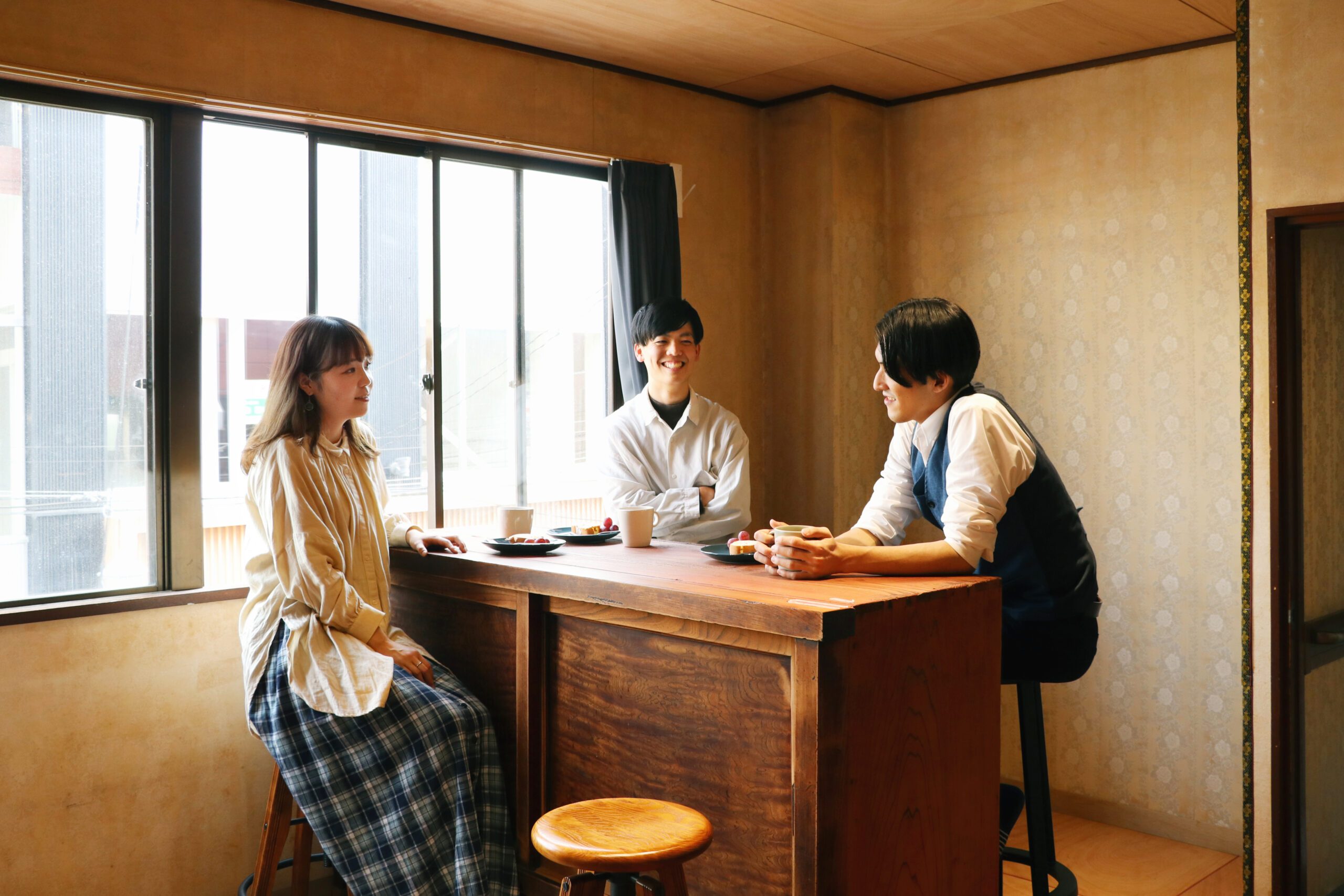
Noi: Hello everyone. I'm Noi, the host of this channel. In this video, we're talking about the valuation of old small-scale residential properties for investment in modern times. This time, following up from last time, we'll be asking Mr. Yoshii, an experienced renovator of old folk houses, about renovation know-how. Mr. Yoshii, please go ahead.
Yoshii: Thank you. In 2017, when I got married, I moved from Tokyo to Tottori, and now I live with my wife and child. Both my wife and I work with computers and work from home, so neither of us has a daily commute. We used our free time to buy a vacant house and self-renovate it. Today, I'd like to share our renovation experience, what went well, and what didn't go well.
Noi: Let's get right into it. We'll be discussing renovation know-how. First, please tell us what should be decided first.
Yoshii: The first things that need to be decided are the purpose and the budget. In my case, the purpose is for us to live in it, but broadly speaking, whether it's for investment or for personal residence changes the renovation approach. If you're renovating for an investment property, others will be using it, so if the property is for tenants, for example, you'd renovate it in a way that tenants would like, and you can determine the cost-effectiveness by considering the budget and the actual income. So, it's easier to decide on the investment aspects. However, in my case, it's a house for us to live in, and when my wife and I start thinking about what we'd like to improve for ourselves, there's no end to it.
When I got an estimate for my ideal, I asked a construction company for a quote, but it was about three times higher than I expected. That's how it turned out, and since I didn't have a budget in the first place, I didn't really know how much it would be when I got the estimate. When I saw the estimate, it looked like I could build a whole new house with that budget, so after that, I was like, "What should I do?"
In such cases, if you decide on a budget beforehand and ask the construction company to come up with solutions that can be realized within that range, or even if you're doing a self-renovation, if you decide on the budget you're willing to spend, you'll know how much you can do with that budget, or what kind of efforts you can make to reduce costs. If you tell the construction company that you want to focus on DIY, they can propose feasible options within a smaller budget. So, I think it's very important to decide on the purpose and budget first.
Noi: Indeed, as you mentioned in the previous video, it seems quite possible for the amount to swell to several times the initial estimate.
Yoshii: When that happens, if you don't have a purpose or budget, you won't know what to cut, and if you're unclear whether you're doing it for passion or investment, the people involved won't be able to make suggestions. So, I think it's less likely to go off track if you clearly define your purpose and budget.
Noi: Even so, I think there's talk that self-renovation can save money, but when amateurs actually try to renovate, I imagine the hurdle is quite high. I'm a DIY beginner, or rather, I've hardly done any DIY, and I think everyone gets stuck on where to start to succeed. Could you tell us how to succeed with amateur renovation?
Yoshii: In my case, I initially tried searching online and on YouTube, but there are so many how-to videos, almost too many to count in search results. It's hard to know which ones are good. If you start searching online without a clear overall picture, it's really difficult. So, I think it's best to start by buying books.
: Even when buying books, it's hard to know which ones are good, and since I was about to build a house, I wanted to reduce expenses as much as possible. So, I went to the library, which I hadn't done much before, to look for books. The DIY section at the library was quite extensive. There's a Tottori Prefectural Library, and they had a lot of books on DIY there. I borrowed a few books that seemed suitable for me and learned from them.
In that process, it's important to first understand the general types of renovations available, such as painting or cutting, and what kind of tools are used in DIY. Once you have that overall understanding, you can then search online for specific details and watch YouTube videos for just those parts to learn concrete work methods and how to use tools.
Also, while studying proceeds in that way, it's important to note that DIY can be done by amateurs, and tools can also be used by amateurs, but especially things like circular saws are extremely dangerous. So, for those, I watched many YouTube videos about the dangers to be aware of and how to use them properly before attempting anything.
Also, when you actually try to do the work, there are often things that are hard to understand just from information written online or in books, so I think it's important to have someone you can consult with whenever needed. When you consider renovating an entire house, there will likely be many points where you wonder what to do. So, it's good to make a list of these concerns. Then, when you buy DIY tools, you can ask the staff at the home center, or ask the construction company from whom you're buying wood and other materials. If you're hiring a contractor for plumbing, you can prepare a list of questions and ask the carpenter who comes for a small job. By doing this, you can clarify how to handle specific parts and learn as you go.
Noi: Thank you. I learned that it's very important to follow the steps: read books, research online, ask people, and then go shopping.
Noi: Could you tell us about the difficulties you encountered after actually undertaking the project?
Yoshii: There were three things: first, the demolition work; second, the extensive painting areas; and third, the significant amount of waste generated, and the cost of waste disposal. A lot of time was spent figuring out how to reduce waste disposal costs.
Demolition work was the hardest part. Breaking down walls was fun in itself, but then a lot of debris and smoke would come out. I used cardboard boxes to dispose of the waste, including wall fragments and such. I was surprised that just breaking down one wall produced enough fragments to fill about 30 cardboard boxes.
For the kitchen, I peeled off tiles, and for the bathroom, which was solidified with tiles and concrete, I removed everything to install a unit bath. There's an architectural term called "hatsuru" (to chip away or shave off concrete). I used a drill to chip away at the concrete, making a space large enough for the unit bath. The drill made a lot of noise, and chipping away at the concrete created a lot of dust, so I wore a mask. It was a pretty tough job that was physically and mentally exhausting.
Next, I struggled quite a bit with the painting work. For painting, I finished most of the walls and ceilings with paint. When painting, I made sure to mask off areas I didn't want to paint and applied masking tape. After that, I applied a primer called sealer about twice before painting. This took about two or three months, so it could be a bit tedious, but it's important how you approach that time. In my case, as I mentioned in another video, I listened to Audible and Voicy, spending the time listening to audio content.
: The third point is reducing waste disposal costs. In my room, four rooms were Japanese-style with tatami mats, but I converted them all to flooring, so all the tatami mats became waste and had to be disposed of. In total, there were probably about 50 tatami mats. When I asked a contractor for an estimate to dispose of them, they quoted about 2,000 yen per mat, which seemed like a considerable amount. So, I researched it and found out that if you cut them up and put them in garbage bags, they can be disposed of as burnable waste. Since I couldn't dispose of them all at once due to the volume, I cut and disposed of one or two mats with a circular saw each week.
Noi: How long does it take to cut one mat?
Yoshii: It takes about 5 to 10 minutes to cut one mat, but I kept doing that for three or four months, and it was subtly tough. It also got in the way of other work, so I put all the tatami mats outside the house. As a result, from the perspective of other people in the area, there were a lot of tatami mats piled up, making the house look suspicious. They even said, "Oh, that's the house with the tatami mats, haha." I really understood that there were many tasks that required a lot of patience.
I think being able to make time is really important. If you can make time, even for tasks like disposing of various types of waste, you can save costs if you put in a little effort. So, the more time you can make, the more you can reduce costs. It's a battle against time, I think.
Noi: Next, regarding the renovation areas, could you elaborate a bit more on the parts you outsourced and the parts you did yourself?
: The areas I outsourced were largely the water facilities: toilets, kitchen, unit bath, washbasin, and EcoCute. I converted to all-electric, so it involved purchasing and installing the EcoCute. I wanted to focus on DIY for the overall project, but for water and electricity, qualifications are required, and electrical work is genuinely difficult without proper skills, so I decided to outsource those.I handled the demolition work myself, such as removing the existing kitchen, washbasin, toilet, and bathroom. I separated the tasks so that I would ask for help at the final stage of installing the equipment.
We coordinated the necessary sizes for installing new items like the unit bath and kitchen with the construction company beforehand. They inspected the site before construction to confirm there would be no issues with installation, and then they took over the work.
We coordinated the necessary sizes for installing new items like the unit bath and kitchen with the construction company beforehand. They inspected the site before construction to confirm there would be no issues with installation, and then they took over the work.
Regarding the EcoCute, I arranged for it myself online, and after the product was delivered, I requested installation. Considering after-sales care, it would be better to purchase everything through the construction company, but buying online was considerably cheaper, and the construction company even advised me to buy it online. So, I think it's good to consider it based on your budget and discussions with the construction company.
Noi: We've heard a lot about the difficulties so far, but conversely, could you please share anything you remember about what went well in the renovation?
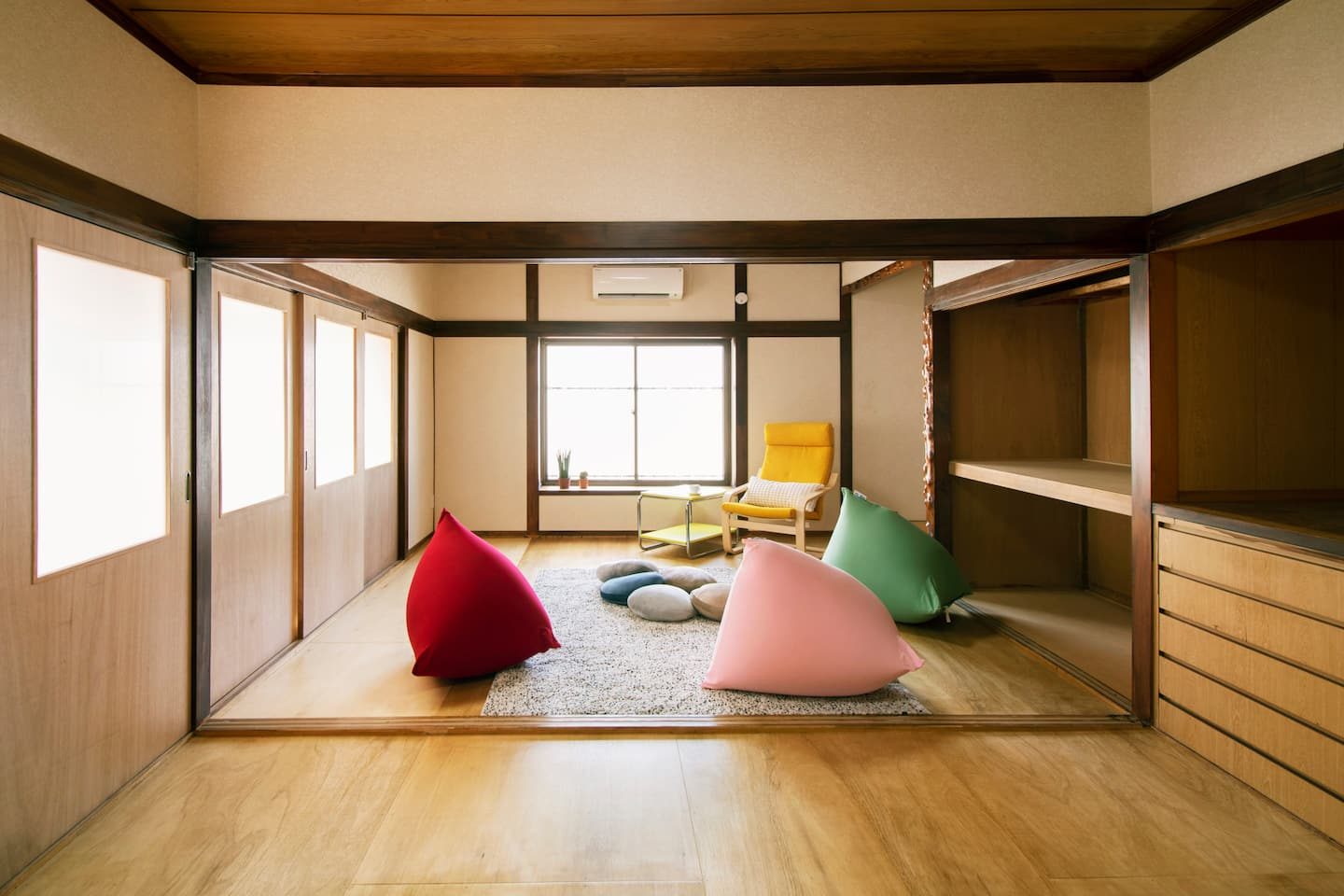
Yoshii: What went well, I think, was the painting. The house was a Showa-era house and generally dark, and I wondered what to do, but I boldly decided to finish the entire house with white paint. By doing so, I was able to finish the house with a much brighter feel.
Initially, there were "coving" between the walls and ceiling, and baseboards between the floor and walls. Since it was originally a Japanese-style room, these were made of wood, and in the Western-style parts, there were similar plastic elements. When I tried to paint, those parts couldn't be painted, so I only painted the areas that could be painted white. However, for the coving and plastic baseboards, I bought liquids that could paint plastic, and by painting everything white, the entire room became white, making even the Japanese-style room look modern. So, I think it turned out well.
As a result, I think it was good that I was able to largely renovate the house and make it brighter by mostly just painting, without having to strip all the walls and ceilings.
Noi: Conversely, are there any points you would like to redo?
Yoshii: If I had decided from the beginning to paint everything white, I think I could have significantly shortened the time spent on masking, protecting, and all those tasks, which I did unnecessarily. I feel there was a considerable loss of time in that regard.
Also, I converted all the tatami rooms to flooring. I did this without any knowledge, just thinking, "This feels about right," and was able to finish it quickly. However, when I later asked professionals or looked at how flooring was done in other houses, the finish was completely different. I saw examples where even amateurs had achieved a beautiful finish. For large-scale tasks, I think it would have been better to have a professional come for about a day to teach me before I started the work.
Noi: I see. Like with the white paint, it's easier if you have a clear vision of the final outcome from the beginning, right?
Yoshii: That's right. I felt like I overdid it without really seeing the finished product.
Based on that, please tell me if there's anything you should consider or prepare beforehand. I think there's the point about designing the goal image, as mentioned earlier, but besides that, regarding tool purchases, I think it's better to buy everything at once. Things like a circular saw, a circular saw guide, an impact driver, an electric sander, cleaning tools like a blower for dust, an electric drill, and a crowbar. Initially, I didn't buy much, and I bought them one by one, wondering if I really needed each one. But the moment I bought them, the speed of work increased dramatically. For example, I was slowly peeling off tiles using a flathead screwdriver and a hammer, but when I bought an electric drill halfway through and used it, the work finished in an instant. So, instead of buying them one by one, I think it's better to boldly buy all the necessary tools at once.
Regarding tools, if you look on Mercari, you can buy and sell them used, so you can sell everything after your DIY project is finished. Considering that, buying everything used and then selling it used might be the best option, as it minimizes time loss and doesn't cost that much money. So, I think that would have been a good approach.
Also, I think I should have considered the timing of material purchases. I bought flooring boards at the beginning, but I bought them too early, and they ended up sitting in the house for about half a year. They got in the way of the work, and if wood is left unattended for too long, it warps. So, while it's good to buy tools early, I realized it's better to prepare materials as needed for the work.
Noi: Next, and finally, regarding the recommendation for house sharing, I'd like to ask about the financial aspects and so on. Please go ahead.
: If you live in a house normally and decide on a budget of 10 million yen, you have to work within that range. As a way to increase that budget, I recommend considering subsidies. Depending on the region, there are often subsidies available for immigrants for vacant house utilization, or for renovation costs to improve insulation. These are usually available every year, so it's a good idea to check the subsidy pages of each prefecture and municipality.I'd like to recommend house sharing. The house we live in, apart from being our residence, is also set up as a vacation rental and a workspace, so it's a property used for business. In some rural areas, there are subsidies to promote vacation rentals. This can significantly reduce renovation costs. For vacation rentals, there are often subsidies of 3 million yen or even up to 6 million yen, so it's worth looking into. I was also able to significantly reduce the burden of renovation costs and new equipment purchases by combining them with vacation rental subsidies. Also, old houses, 40 or 50 years old, often have many rooms, and toilets might be separated on the first and second floors. Sharing the house is also good for effectively utilizing unused rooms in a household.
I'd like to recommend house sharing. The house we live in, apart from being our residence, is also set up as a vacation rental and a workspace, so it's a property used for business. In some rural areas, there are subsidies to promote vacation rentals. This can significantly reduce renovation costs. For vacation rentals, there are often subsidies of 3 million yen or even up to 6 million yen, so it's worth looking into. I was also able to significantly reduce the burden of renovation costs and new equipment purchases by combining them with vacation rental subsidies. Also, old houses, 40 or 50 years old, often have many rooms, and toilets might be separated on the first and second floors. Sharing the house is also good for effectively utilizing unused rooms in a household.
I was also able to significantly reduce the burden of renovation costs and new equipment purchases by combining them with vacation rental subsidies. Also, old houses, 40 or 50 years old, often have many rooms, and toilets might be separated on the first and second floors. Sharing the house is also good for effectively utilizing unused rooms in a household.
Also, once you can create a simulation where sharing your house can generate income as a business, it becomes different from just living in it yourself. You can then take the perspective of increasing your budget, getting better facilities, and creating a situation that guests will enjoy.
In my house, the entrance door couldn't accommodate smart locks, so we completely replaced the door and installed a smart lock as part of the renovation. Since various people would be visiting the house, I wanted them to be as comfortable as possible, so we also replaced all the windows with double-paned glass to improve insulation. There was also a subsidy for this, so we were able to replace the windows quite cheaply.
When people come to the house, to make them as comfortable as possible, I want them to enjoy delicious coffee, so I have a DeLonghi coffee maker. If it's just for our own comfort or buying nice things for ourselves, it's hard to decide, but when you consider it as a business and increasing income, it becomes easier to buy slightly better things, I think.
This is a bit off-topic from the budget, but living in the countryside often means less diversity and a narrower perspective. By sharing your home, you create opportunities to connect with people from outside the region or from overseas. So, I encourage anyone living in the countryside and working remotely to consider it.
: That's really good. Living in the countryside, it can be difficult to get stimulation, and the amount of information and people tends to decrease. But creating such a space and opportunities yourself is truly wonderful, I thought. This time, Mr. Yoshii, an experienced renovator, shared his renovation know-how with us. I think this was a very helpful session for those who are about to start DIY. In future videos, we will continue to upload content about the valuation of old small-scale residential properties for investment in modern times, so please check them out. Thank you very much, Mr. Yoshii, for today.Noi
Yoshii: Thank you very much.
First published: Akiya Lab (2024 - now integrated into this site)
FIND YOUR STAY
Feel free to contact us for accommodation booking inquiries, move-in consultations, viewing appointments, media inquiries, etc.
Contact Us