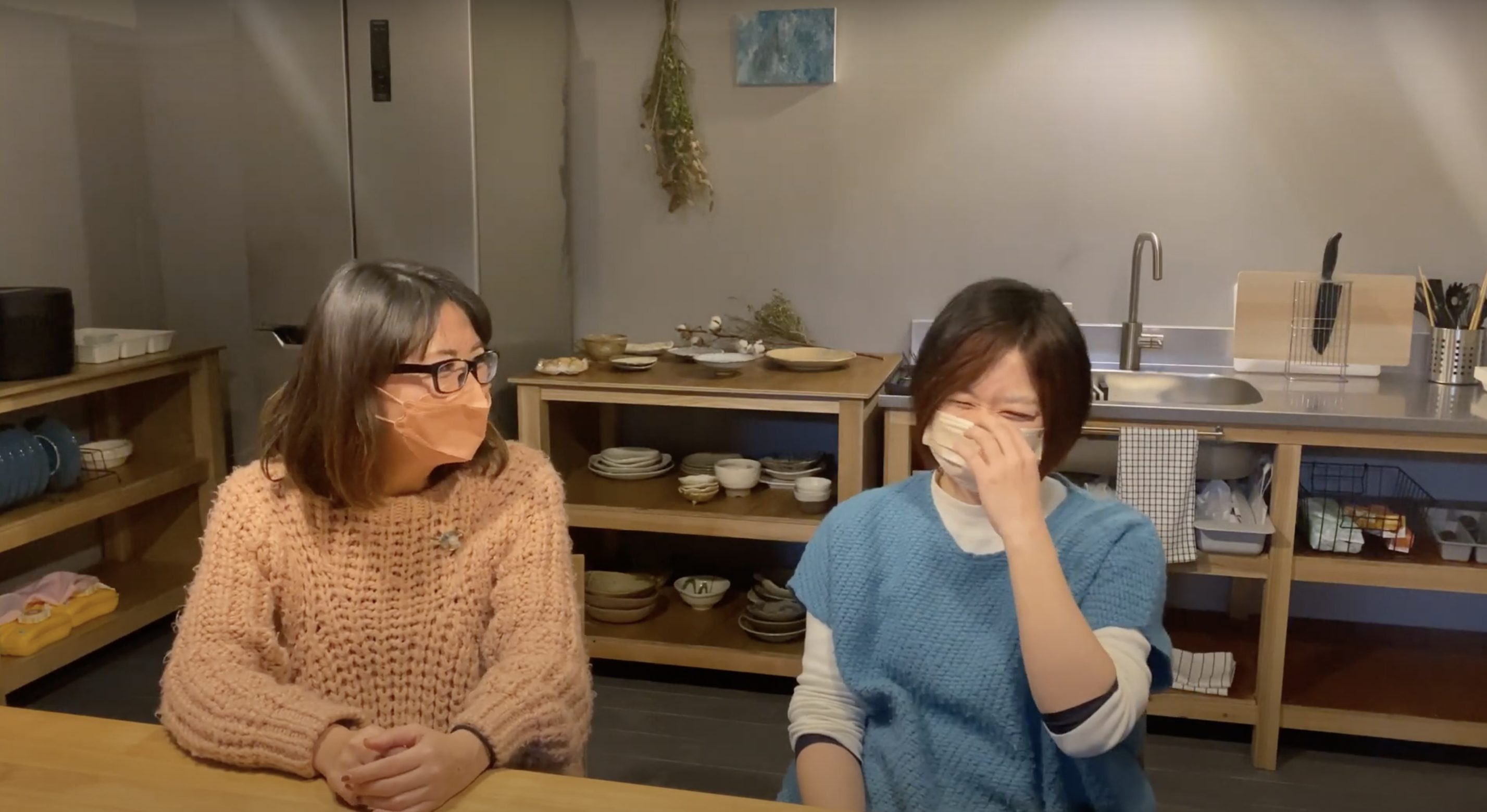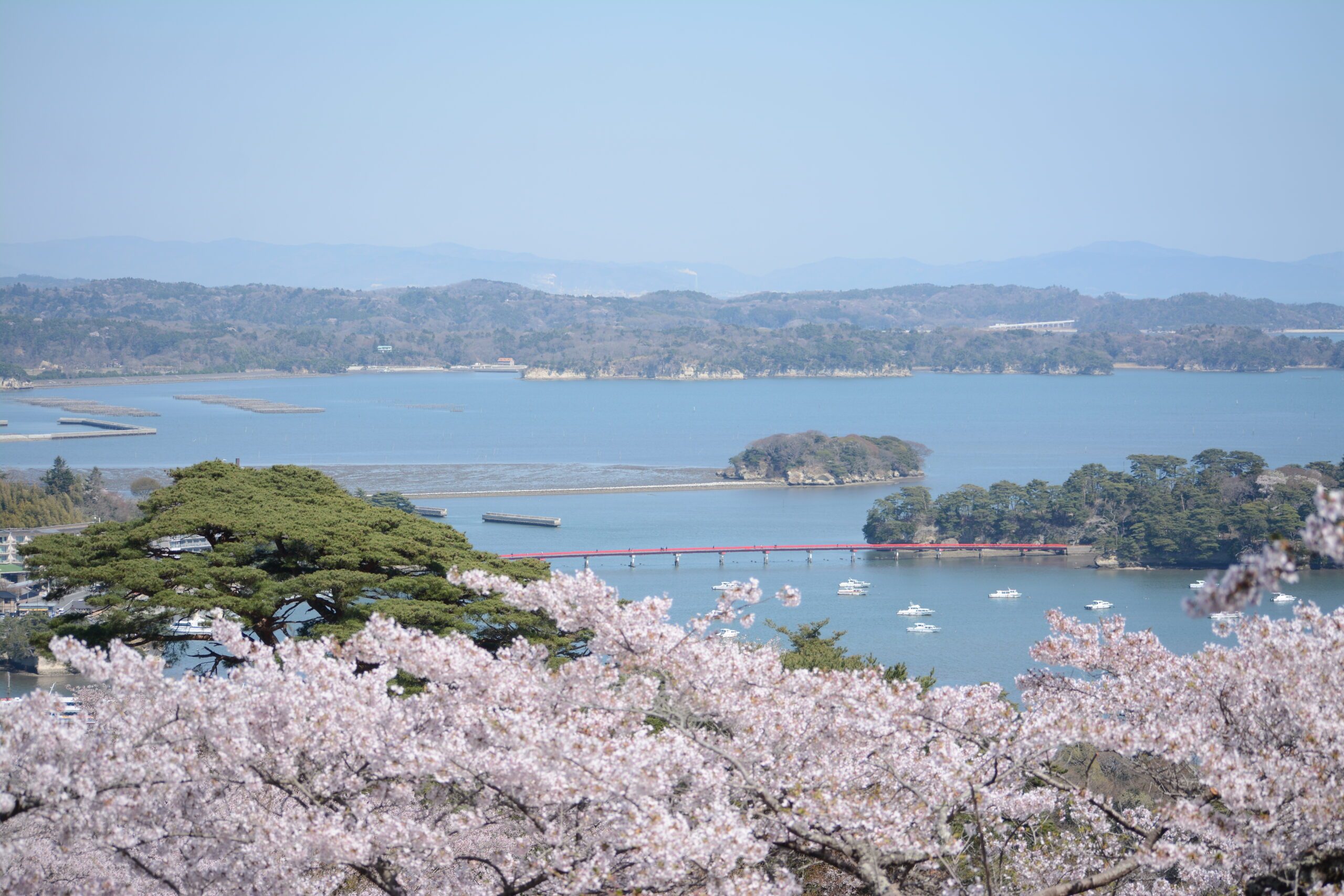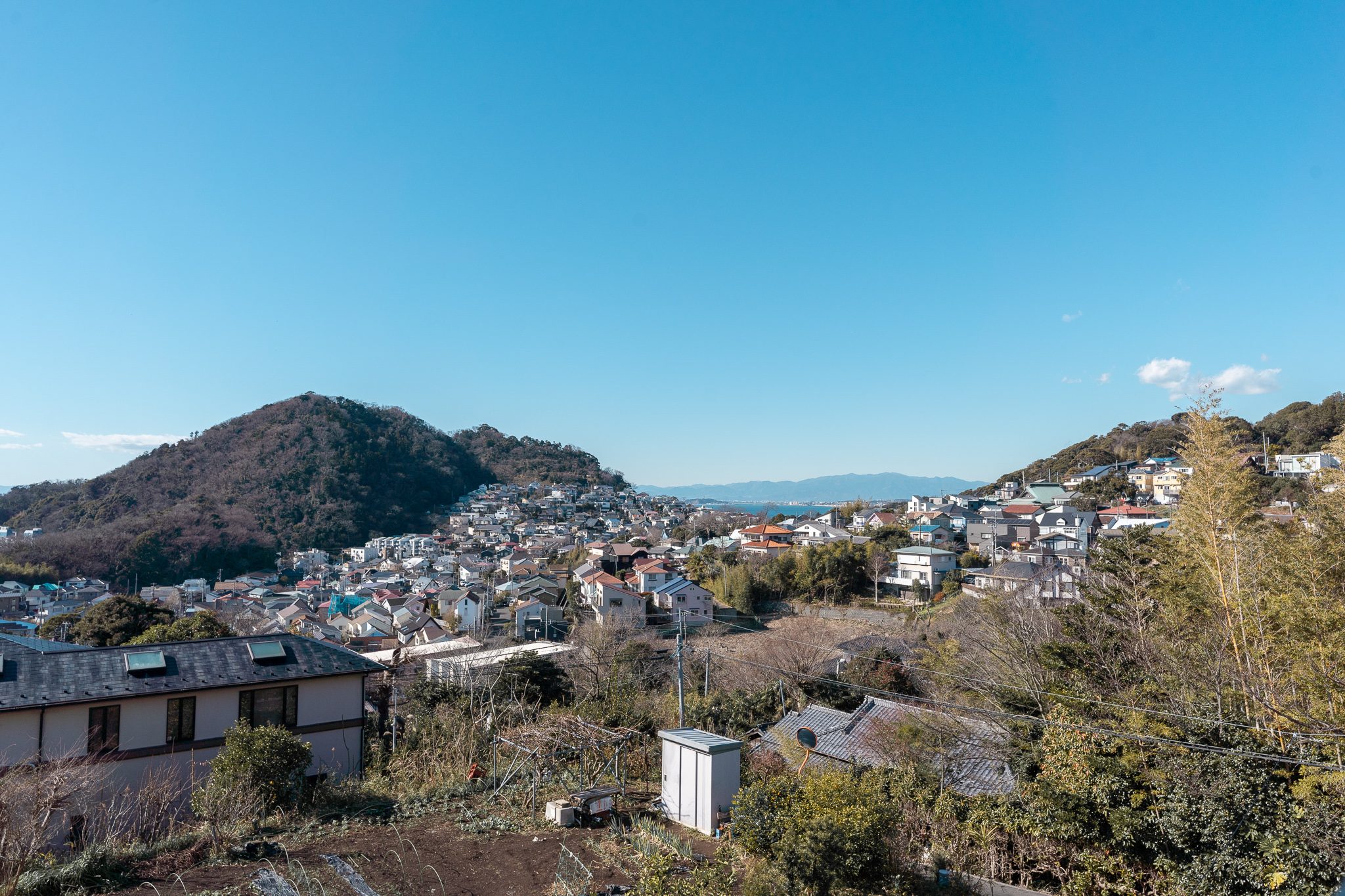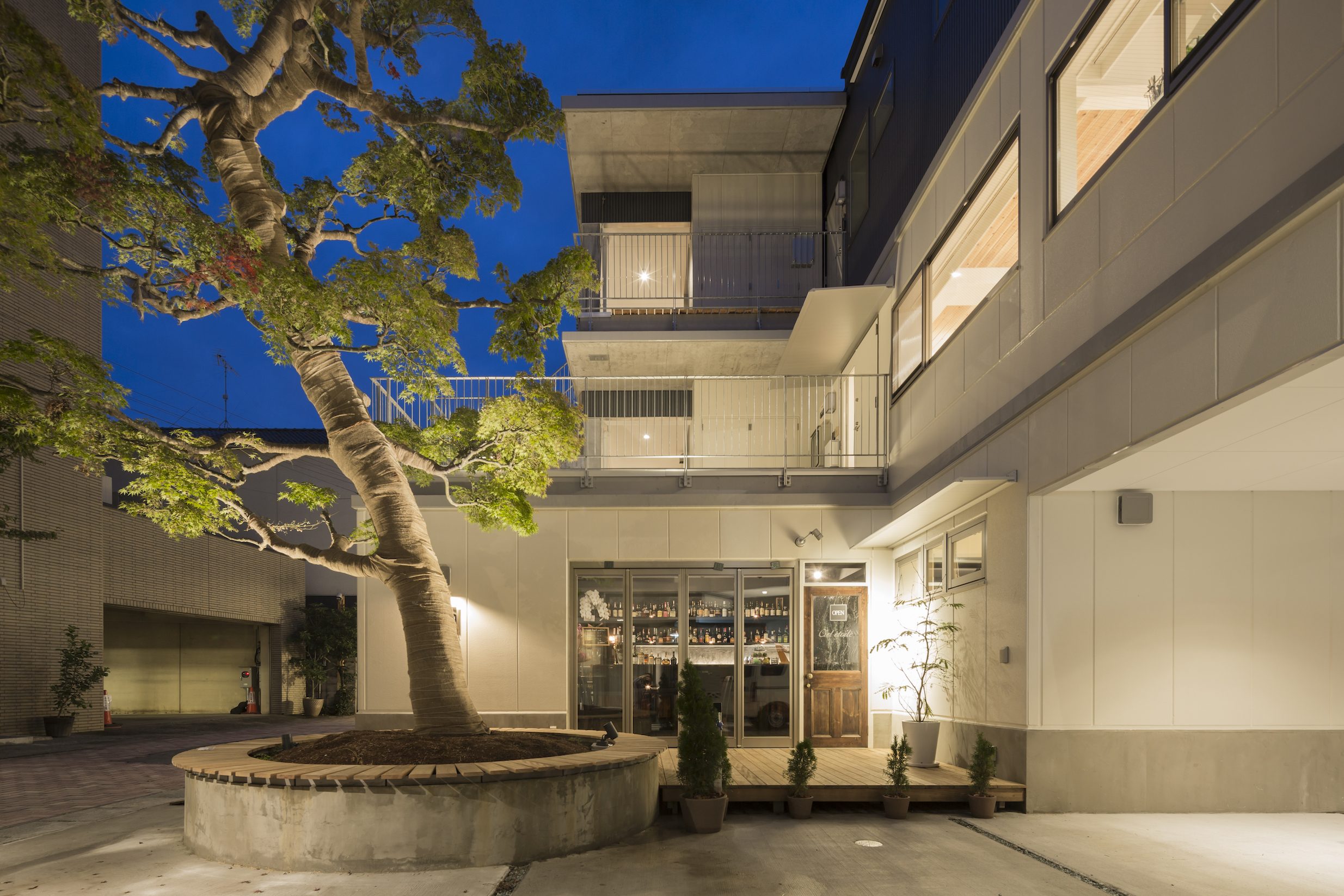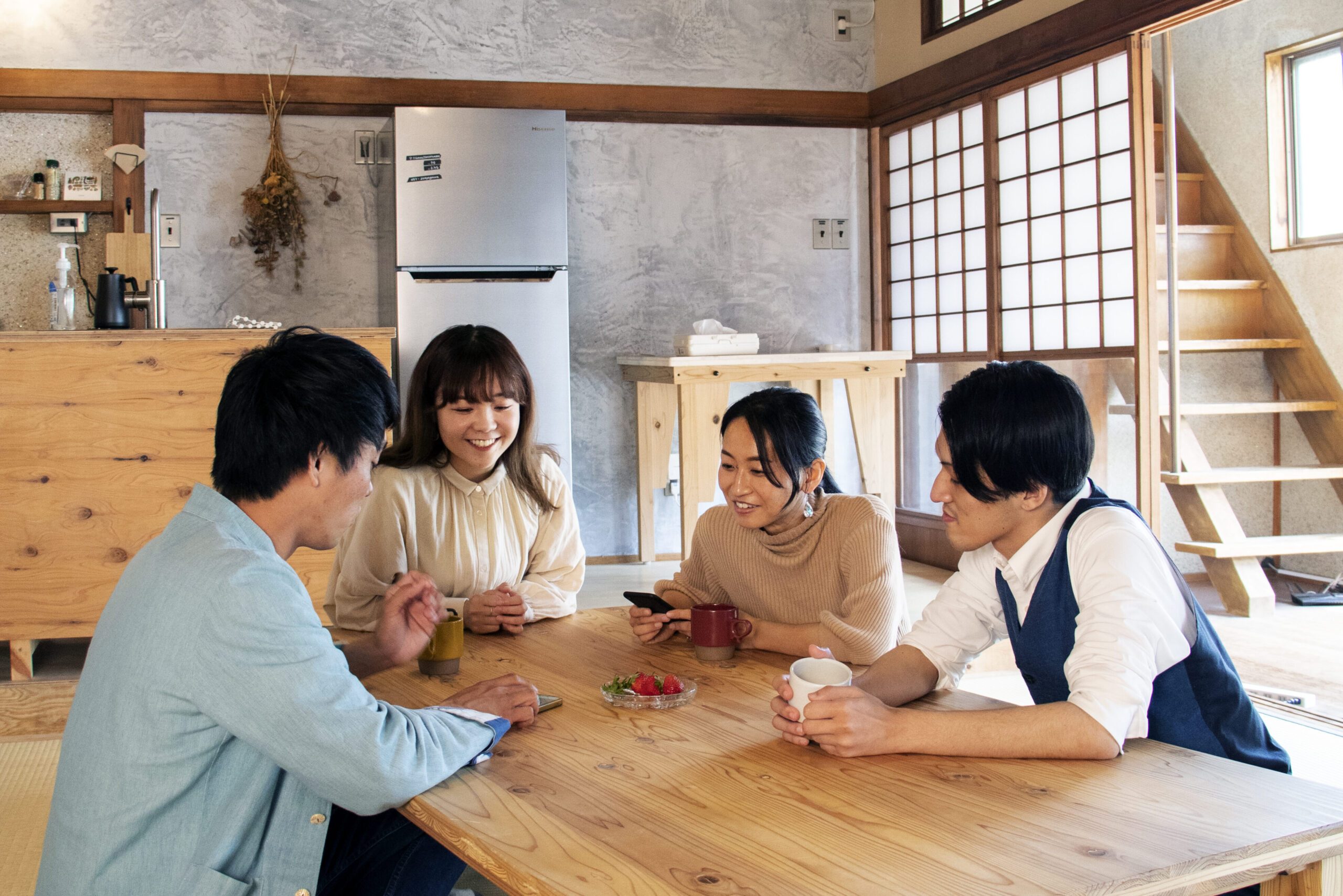
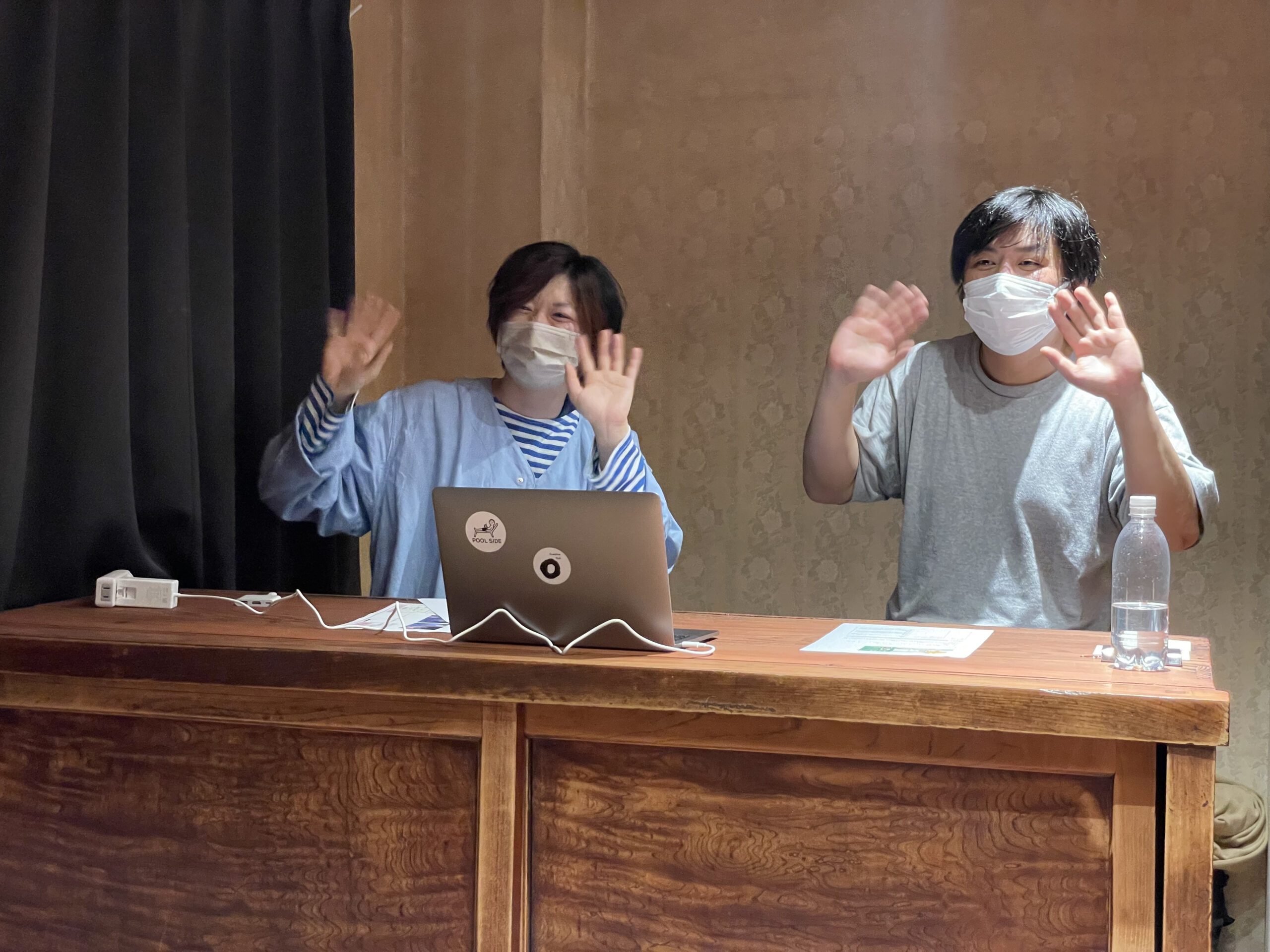
"Daydreaming in a Share House" is a talk event held at Roopt, a share house utilizing retro properties, where landlords and guests freely imagine fun ways of living, thinking "it would be nice to do this" and "it would be nice to have that." For this second installment of the Shiogama Kaigan-dori edition, we invited Yuta Chida, who was born in Shiogama City and is currently based there for his art activities, to daydream about share house living in Shiogama.
This time, we delved into Mr. Chida's "eventful" life so far, and discussed the significance of share house living and the joys of living in Shiogama. The atmosphere was bright and filled with laughter throughout, and some passionate discussions emerged that made us think, "Share houses are great!" and "I'd love to live in a share house." Please enjoy reading on.
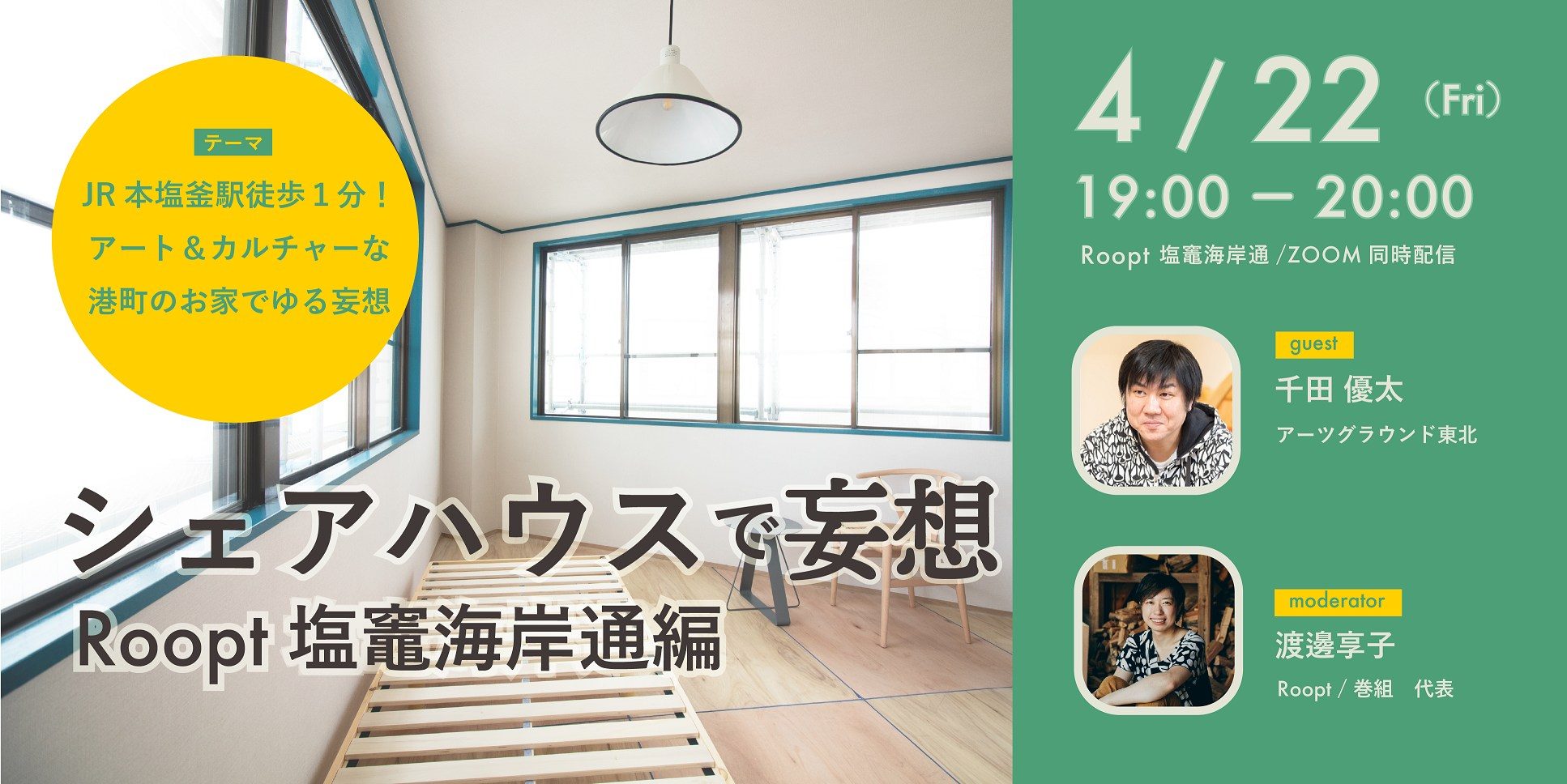
Born in Shiogama City, Miyagi Prefecture in 1980. Art coordinator and performer. Graduated from Miyagi University of Education. From 2011 to 2014, he worked at the secretariat of ART Revival Connection TOHOKU (now ARCT), and in 2015, he became its representative. From 2014 to 2018, he was the festival manager for the "Sanriku International Arts Festival." In 2016, he established "Arts Ground Tohoku General Incorporated Association." Utilizing his experience as an elementary school teacher and in contemporary dance, he plans and produces projects for regional and performing arts in Tohoku.
First, let's briefly introduce Roopt Shiogama Kaigan-dori, the setting for this "daydreaming" session.
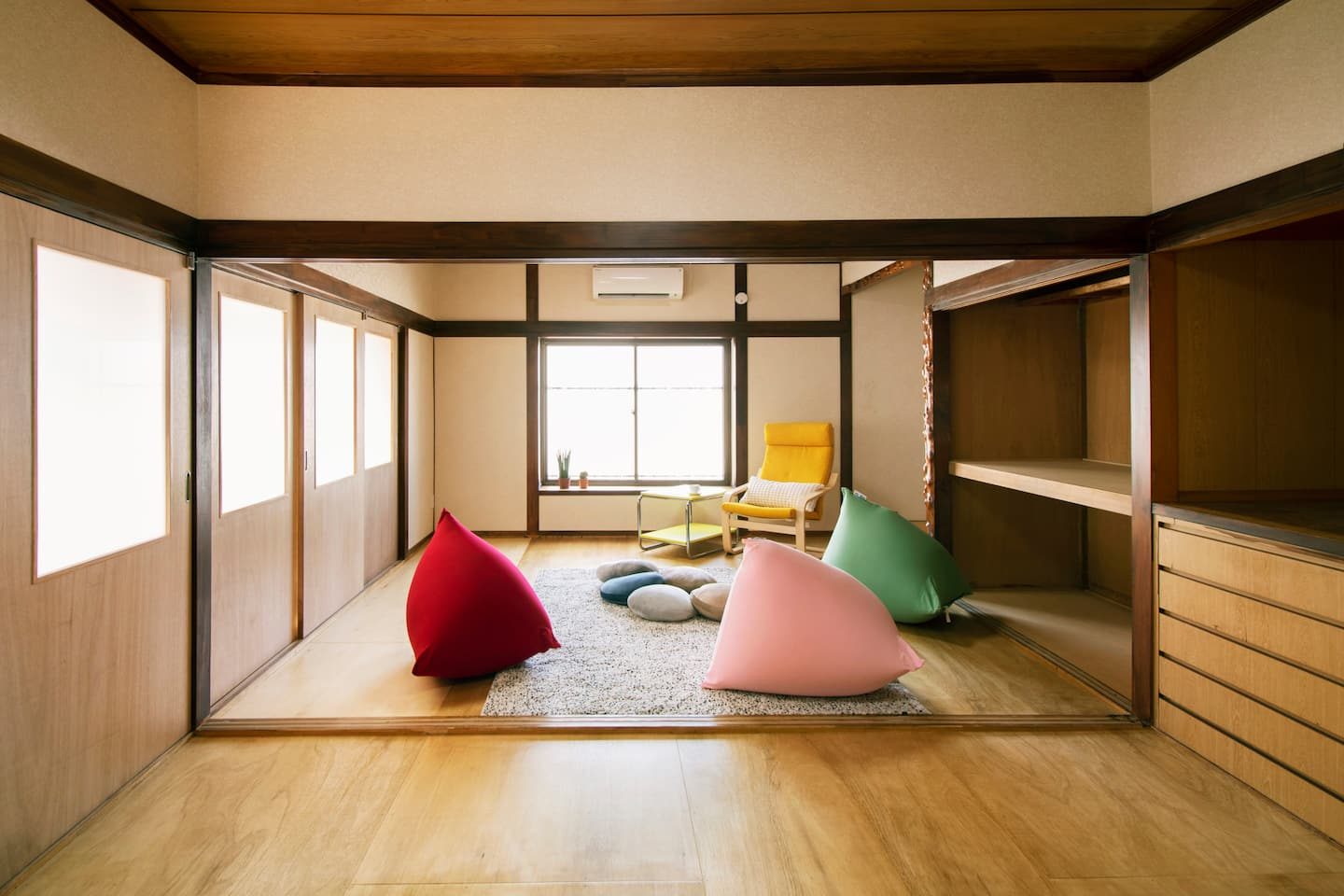
Roopt Shiogama Kaigan-dori is a four-story share house located about 30 minutes by train or car from Sendai Station, and a 1-minute walk from Hon-Shiogama Station on the JR Senseki Line. The second floor has a common space and rooms for vacation rentals, while the third and fourth floors have a total of five private rooms for share house residents. It's a place where you can experience Shiogama's "artistic" atmosphere, with features like bookshelves utilizing the stair steps, a tricolor painted ceiling, and tatami mats, which became waste material during renovation, embedded in the walls.
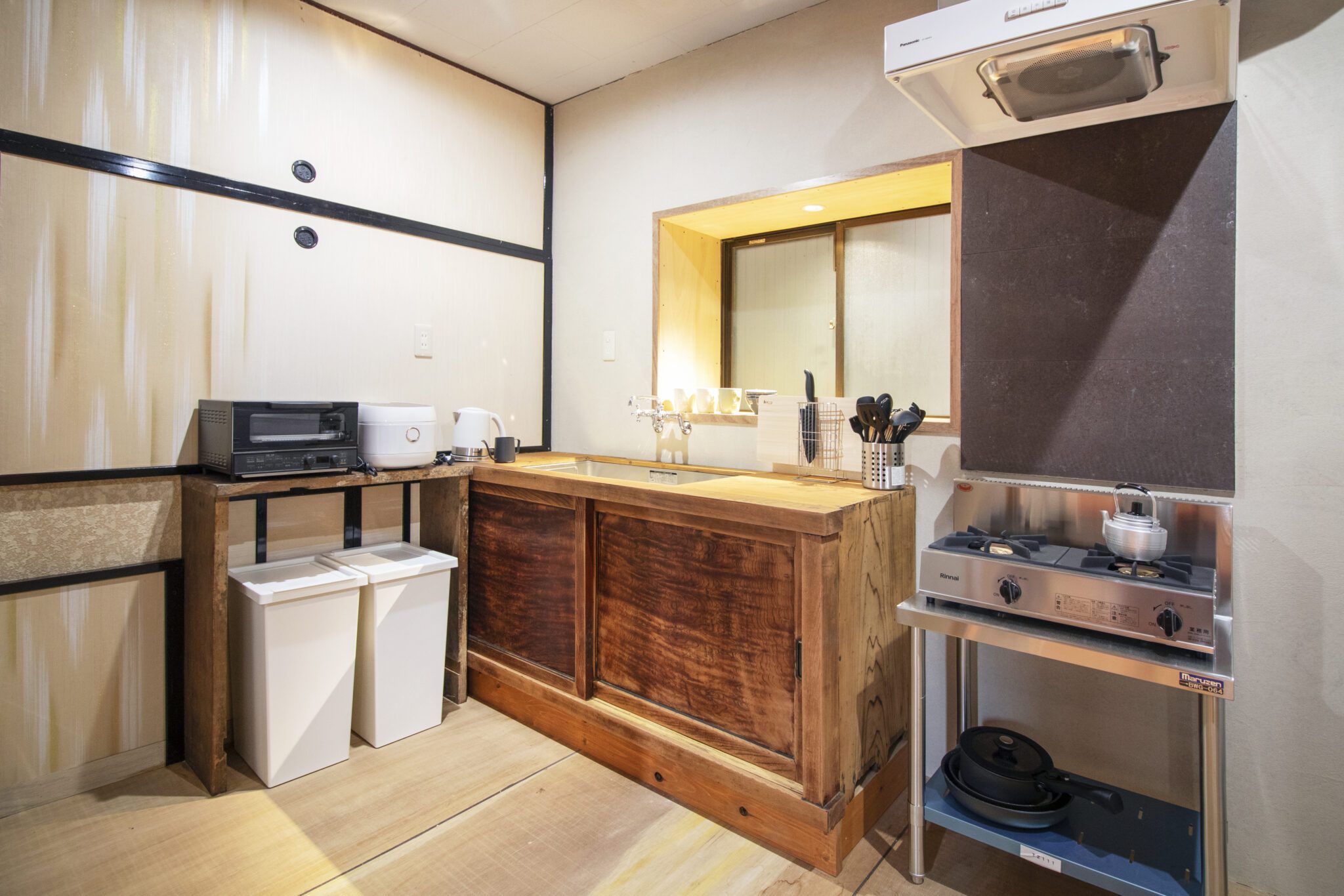
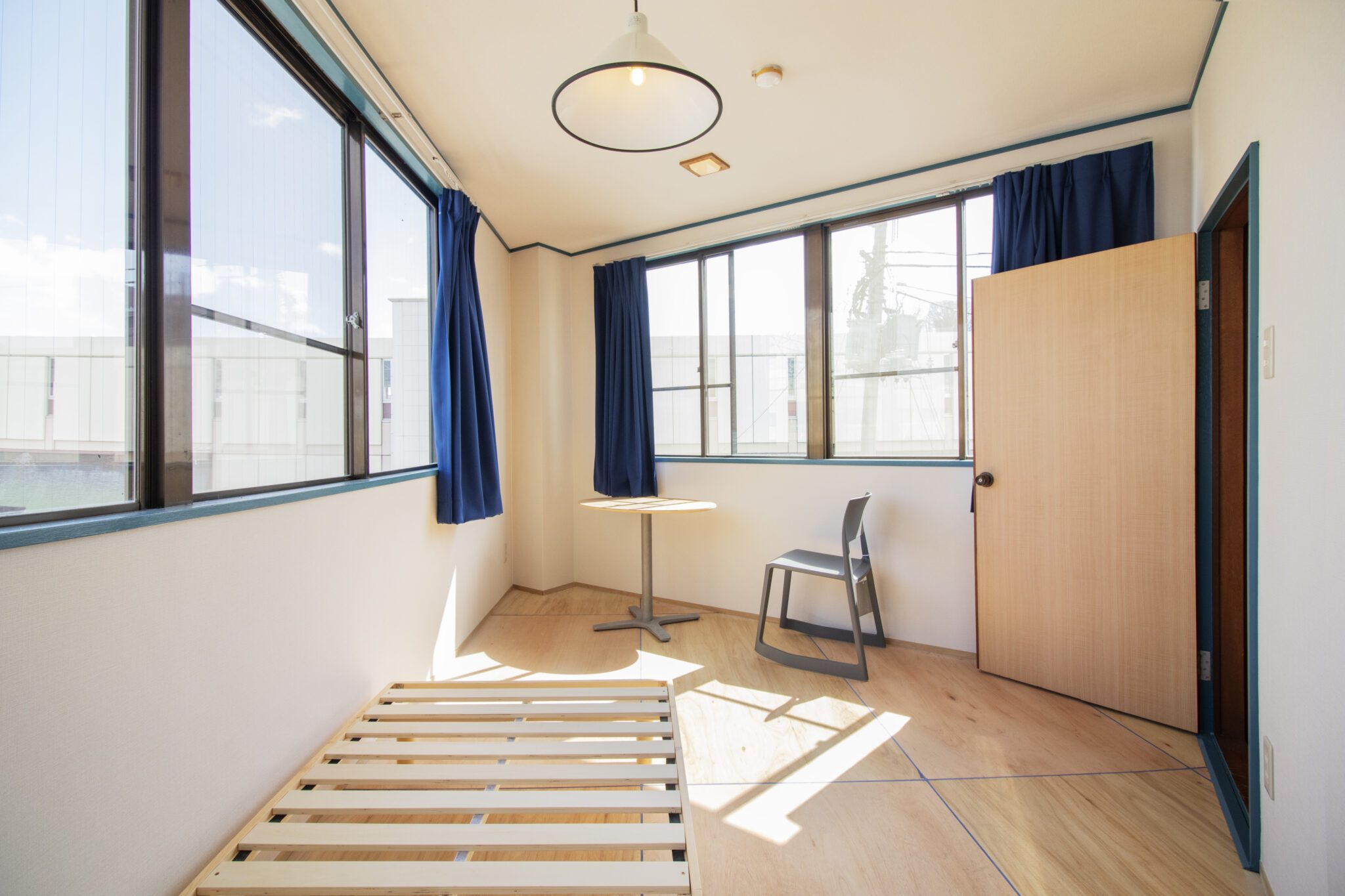
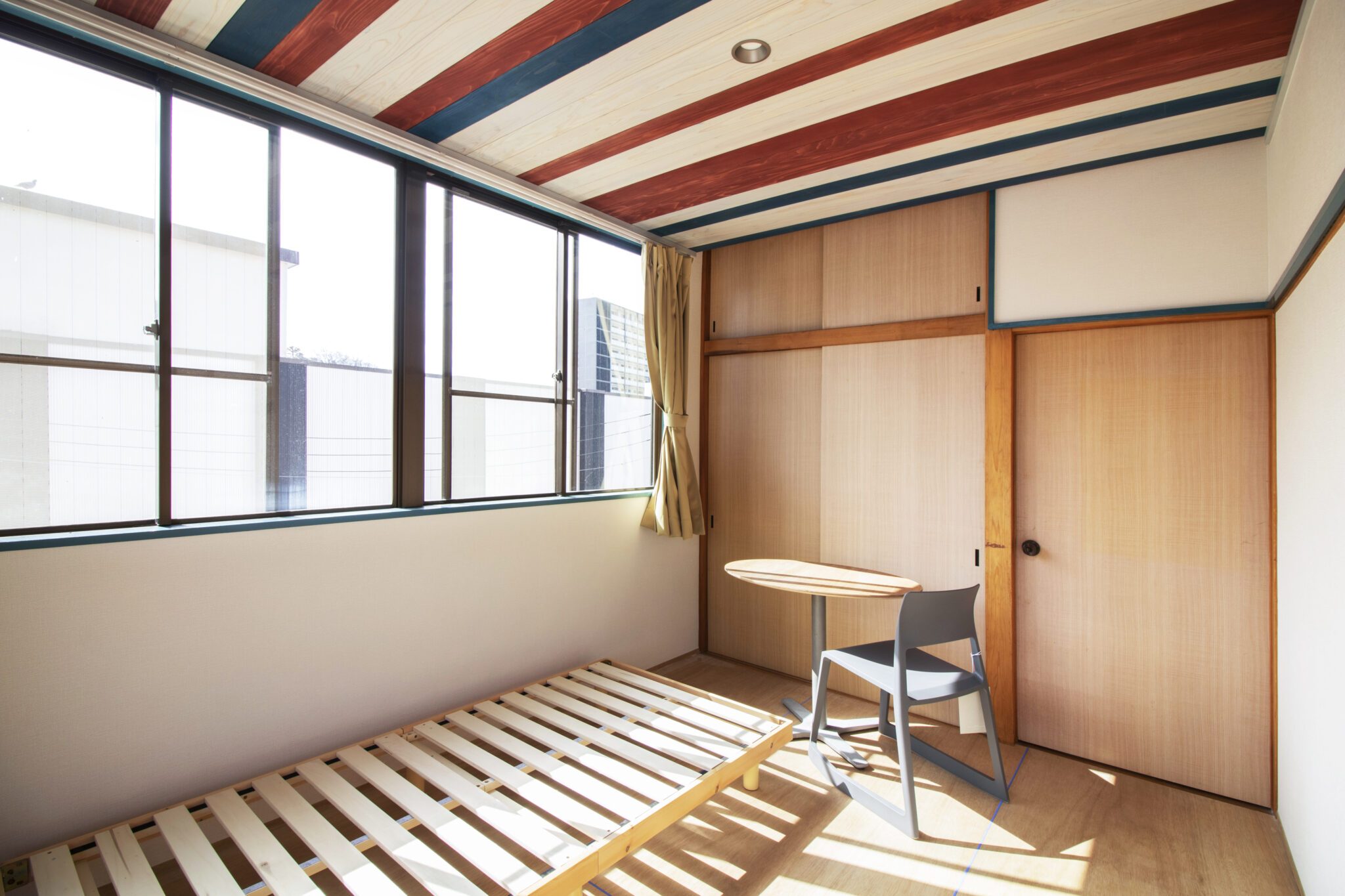
If you'd like to know more about Roopt Shiogama Kaigan-dori, please refer to this share house information page.
Watanabe: Mr. Chida, you're from Sendai and spent your elementary and junior high school years in Shiogama, and then you experienced living abroad, right?
Chida: Yes, when I was in junior high school, I went to Germany for a one-year exchange program and stayed with a host family that had three boys. But I hated only hearing German around me and became homesick, so I would sleep in again after waking up because I didn't want to hear German. My host family probably thought I was a heavy sleeper (laughs).
Watanabe: That's interesting right from the start (laughs).
Chida: It was good that I eventually got used to life in Germany, but on the other hand, I completely stopped being exposed to Japanese. It was a shock when I tried to speak Japanese with a Japanese person after six months and couldn't (laughs).
Watanabe: After such an eventful life in Germany, you returned to Japan, right?
Chida: I graduated from a local high school, then entered Miyagi University of Education, and after that, I worked as an elementary school teacher in Tokyo. I lived in a men's dormitory during university, and I also lived in a share house with friends in Tokyo, so looking back, I spent a long time living with people other than my family.
Watanabe: Please tell me more about your share house experiences later. Since you're currently active in the art world, being an elementary school teacher was a bit surprising. What was the reason for that?
Chida: Actually, I became an elementary school teacher to raise funds.
Watanabe: To raise funds, you say?
Chida: There was a regular izakaya I went to in Sendai, and interesting people, like those involved in theater, often gathered there. I liked that atmosphere and dreamed of "creating a place like this myself!" But I needed funds. So, I planned to work as an elementary school teacher for about five years to save money, then train at a restaurant for about five years before opening my own.
Watanabe: So you had such a plan! But you actually resigned after three years, not five.
Chida: Looking at the teachers around me, they started being entrusted with important positions after about three years, and I thought, "If I continue for five years, it'll be hard to quit," so I resigned after three years. At the same time, the share house with my friends was also dissolved, and since I didn't have money at the time, I decided to go back to my parents' house, but in the end, I didn't go back home and went straight to Honduras instead (laughs).
Watanabe: That's another amazing place (laughs).
Chida: My mother was in Honduras at the time to create a dance piece, and she asked me to come help her with the creation. I didn't have any plans for what to do next, and I had few belongings from living in a share house, so I just sent my unnecessary luggage to my parents' house and went straight to Honduras.
Watanabe: By the way, who received that luggage?
Chida: I wonder what happened to it, I still don't know (laughs).
Watanabe: Was Honduras a completely different environment from Japan?
Chida: Yes, especially the public safety was completely different. For example, it's dangerous to walk outside, so I mostly traveled by taxi during my two-month stay, and ordinary shops had gun lockers. Unlike Japan, Honduras is a country where guns are widely available, so I was surprised by that gap.
Watanabe: It's hard to imagine if you haven't been there... Were there any memorable events during your previous stay in Germany?
Chida: I'll never forget Christmas Day. In Japan, it's customary for adults to give presents to children, but in Germany, each family member prepares and gives presents to everyone. Of course, I didn't know that, so I was the only one who didn't bring presents and just received them, which was quite embarrassing (laughs).
Watanabe: I couldn't handle that (laughs).
Chida: There were also many moments where I felt the difference from Japan, such as being allowed to drink and smoke from age 16, and a strong interest in politics. I think a big takeaway from living abroad was learning that "there are many differences you won't understand unless you live together."
Watanabe: The attitude of "it's natural for others to be different," like in living abroad, might also be important in share house living or family life.
FIND YOUR STAY
Feel free to contact us for inquiries about accommodation reservations, move-in consultations, viewing appointments, interviews, etc.
Contact Us