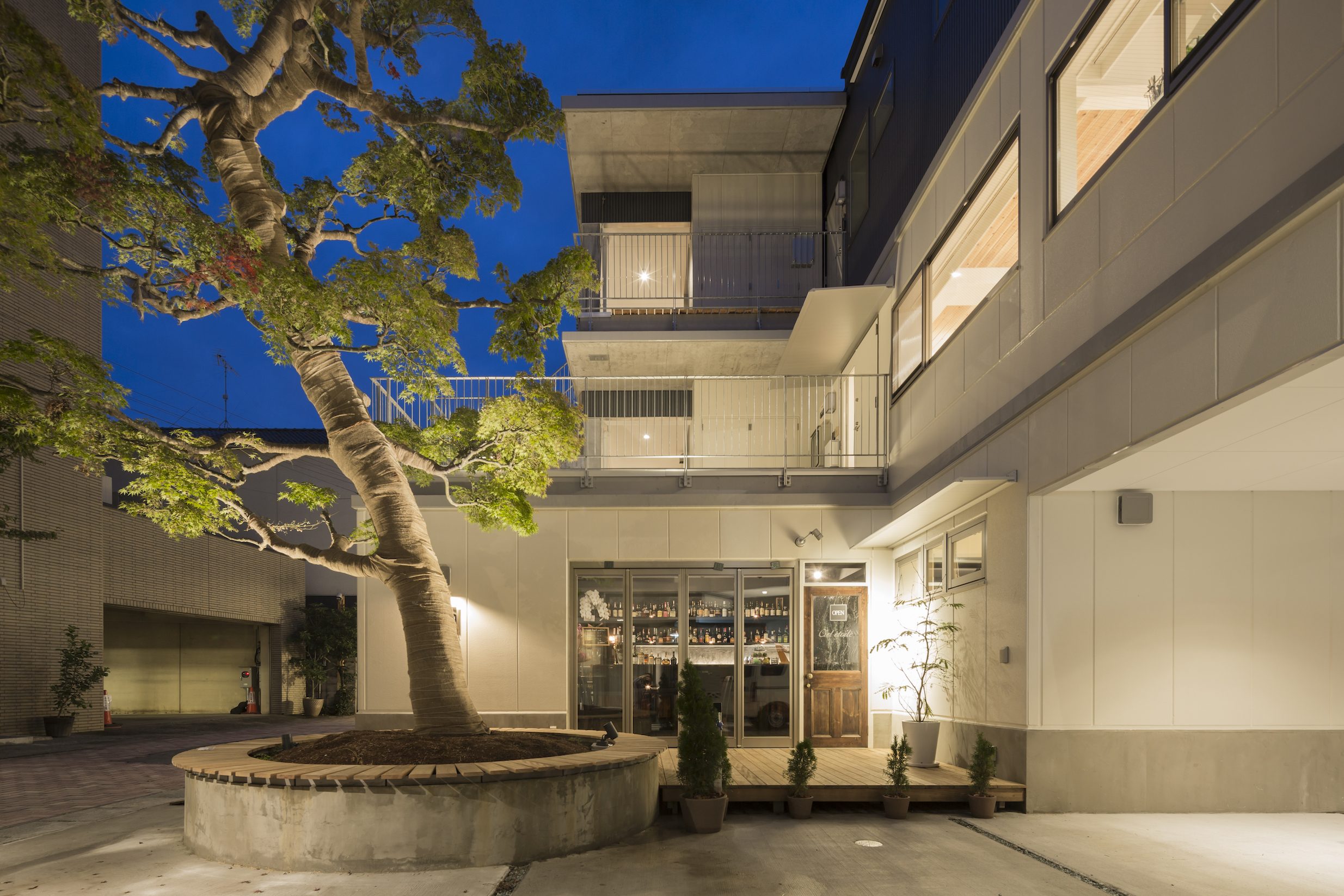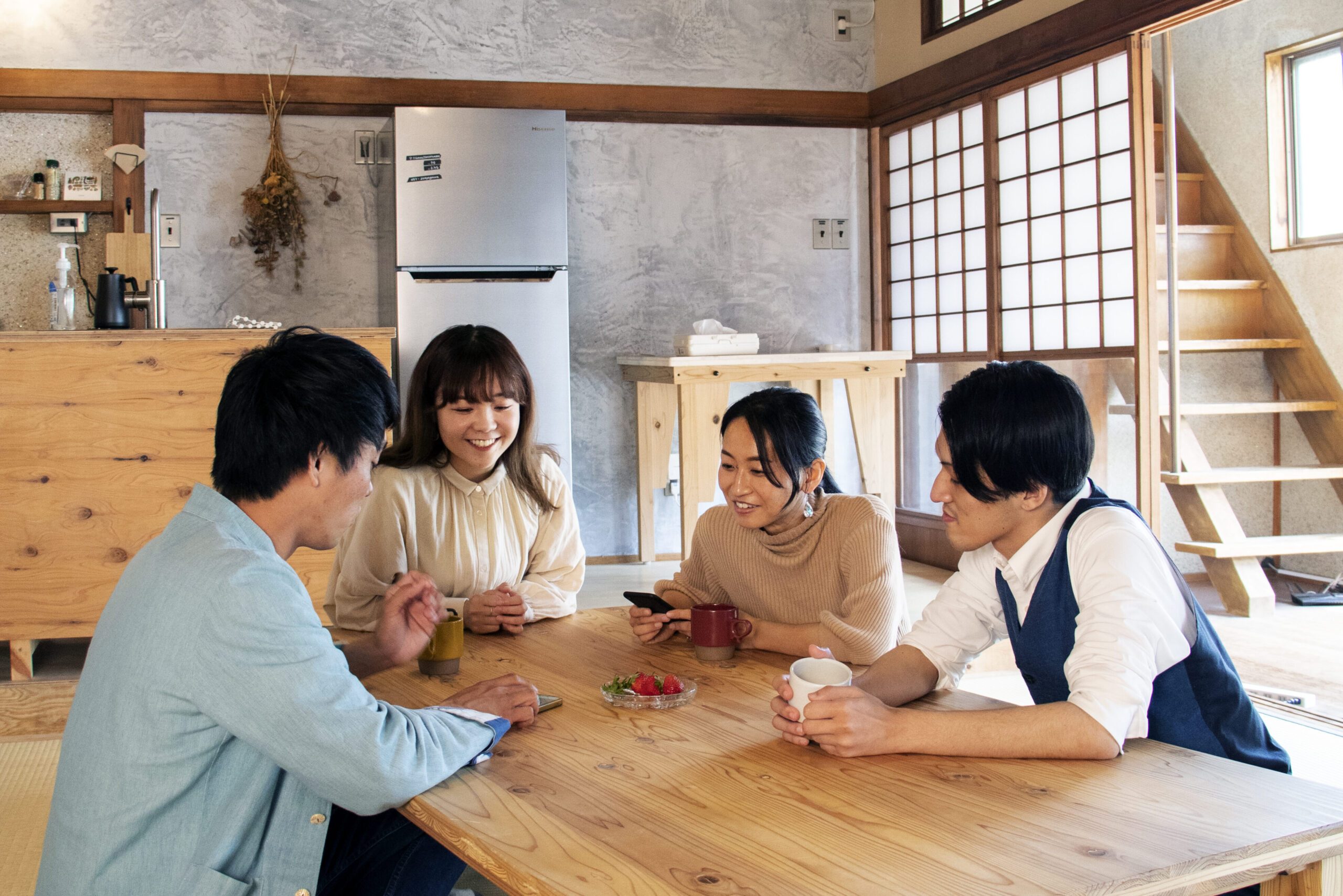
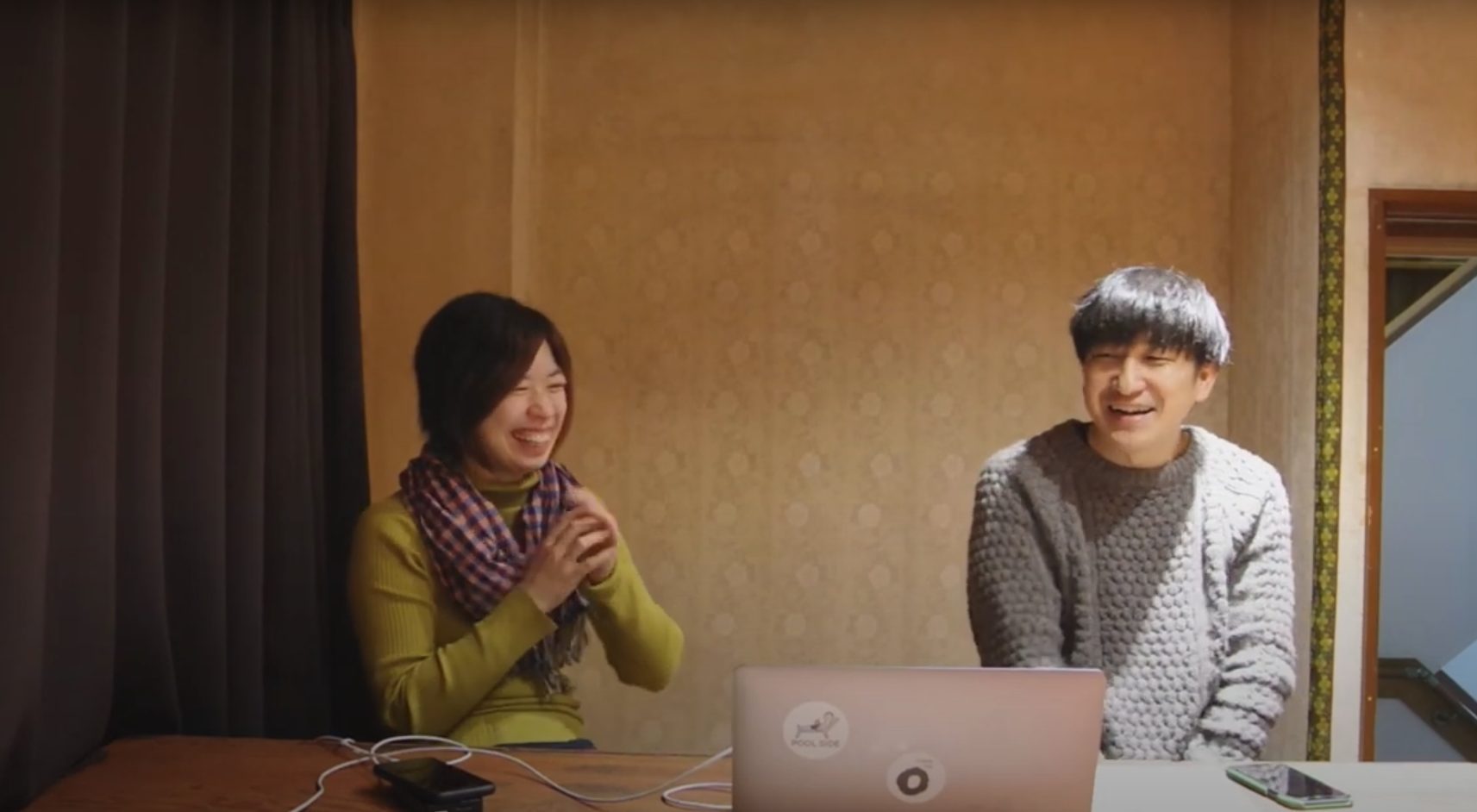
"Daydreaming in a Share House" is a talk event where landlords and guests at 'Roopt,' a share house utilizing retro properties, freely imagine fun ways of living, thinking, "It would be nice if we could do that" or "It would be nice if we had this." For the first installment of the Shiogama Kaigan-dori edition, we invited Kazunari Monou, who is involved in community building activities mainly in Sendai, and together with event participants, we brainstormed various ideas about life at Roopt Shiogama Kaigan-dori and in Shiogama City.
There were many ideas unique to Mr. Monou, who is well-versed in media and communities, making the entire venue an exciting place. Please read along and imagine what kind of life you could have in the port town of Shiogama, full of nostalgic charm.
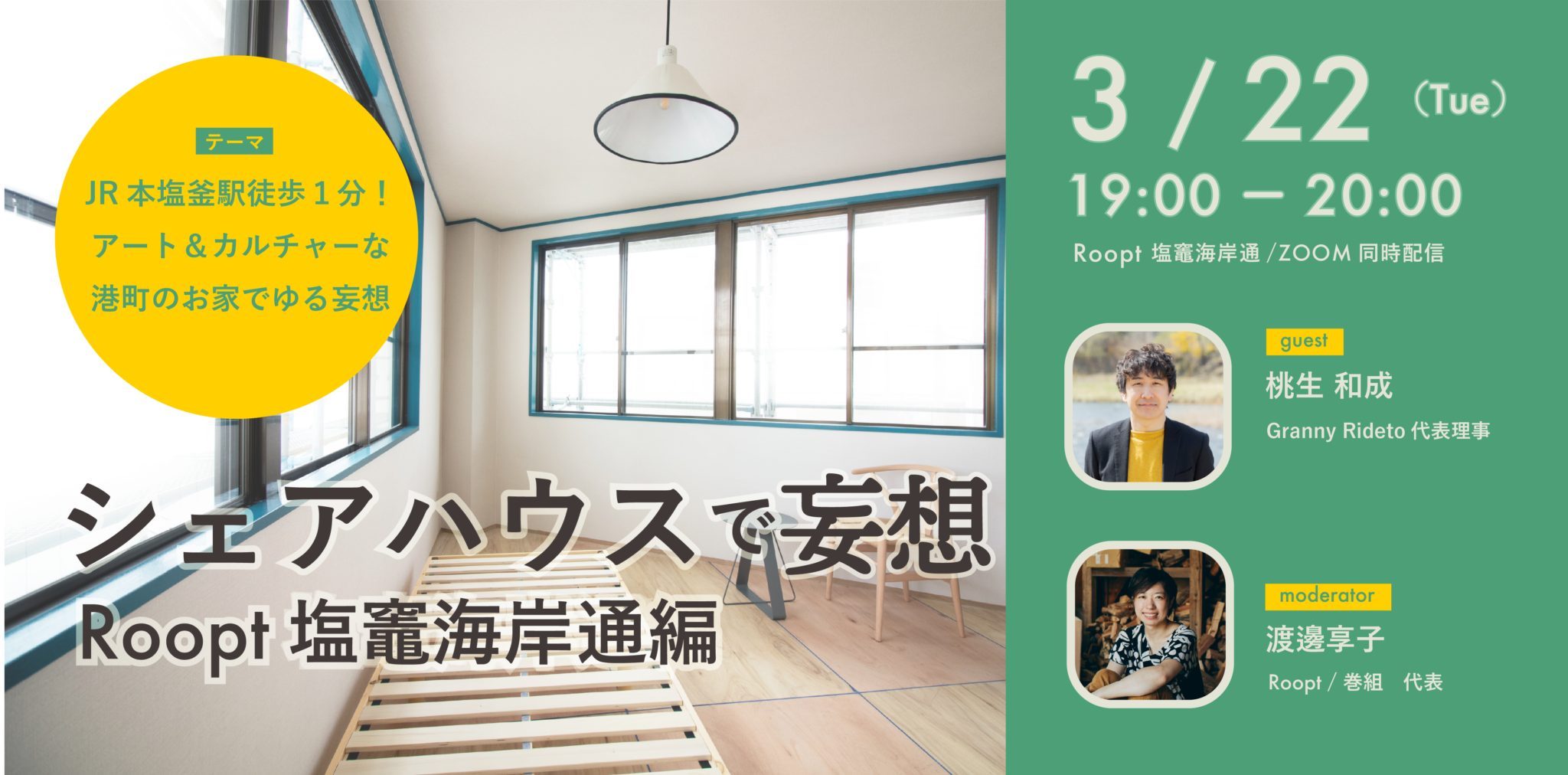
Born in Sendai City in 1982, raised in Iwaki City. Completed the doctoral preliminary course in Spatial Design, Department of Business Design, Miyagi University Graduate School. Joined Sendai Miyagi NPO Center in 2008. After serving as director of Tagajo City Citizen Activity Support Center, he resigned in 2016. In the same year, he established Granny Rideto General Incorporated Association. Director of Rifu Town Machi Hito Shigoto Creation Station tsumiki (2016-), Director of shared complex THE6 (2016-), Part-time lecturer at Tohoku Bunka Gakuen University (2018-). Co-authored "Citizen Participation-based Urban Development Learning from Reconstruction - Intermediate Support and Networking -" (Soseisha, 2018). Also active as the leader of Tsurezure-dan, a group focused on making everyday life in Tohoku more interesting.
First, let's briefly introduce Roopt Shiogama Kaigan-dori, the stage for this "daydreaming" session.
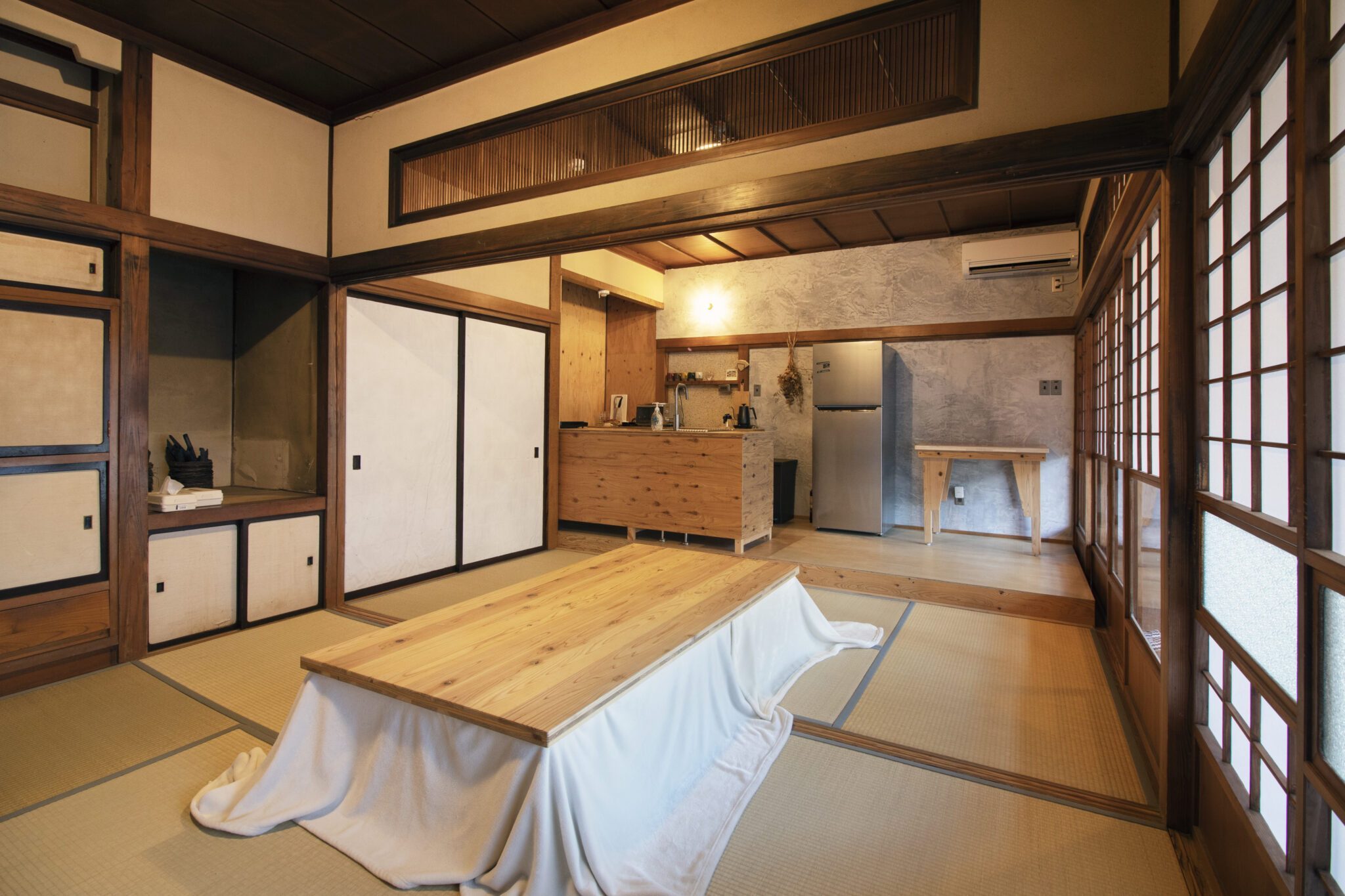
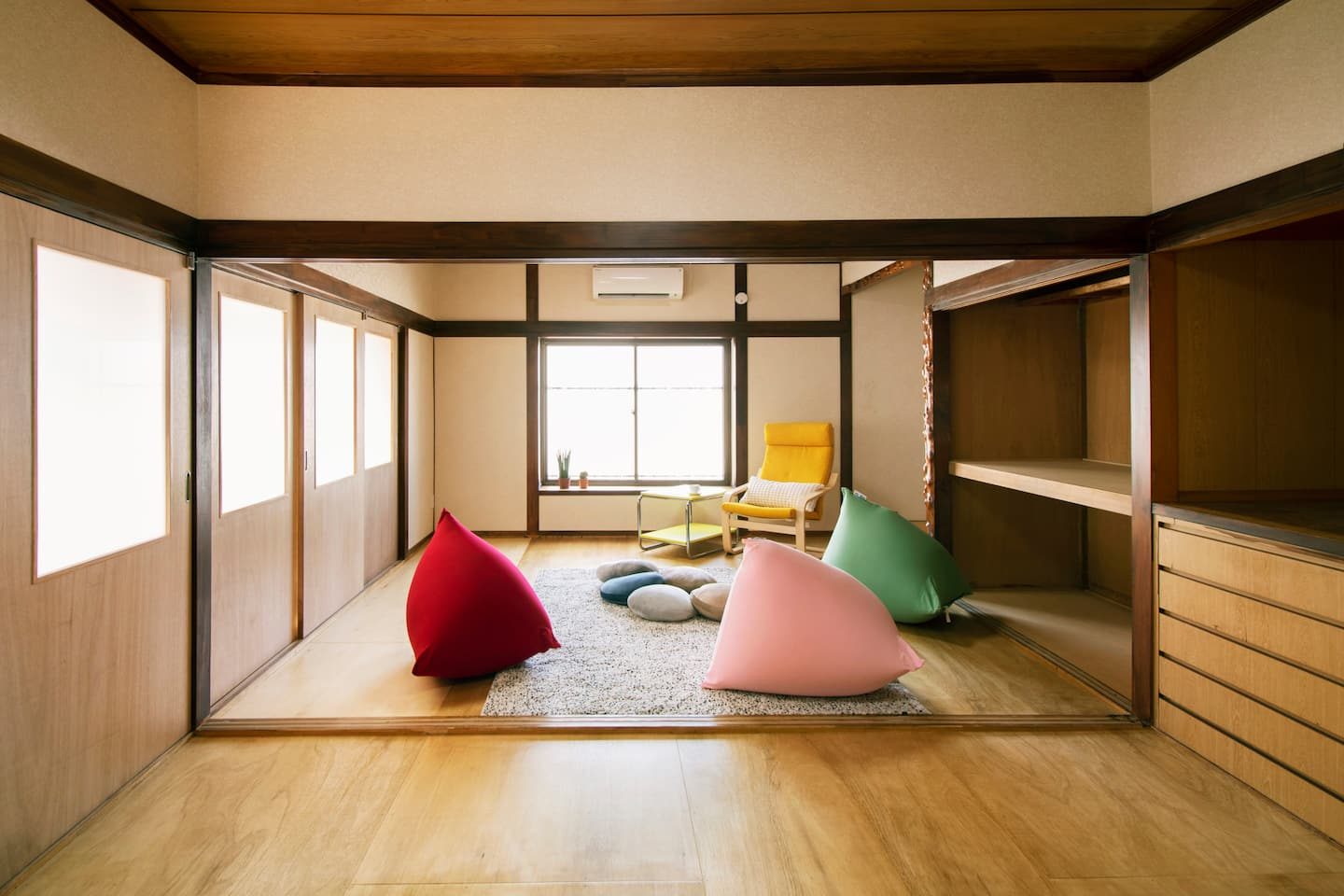
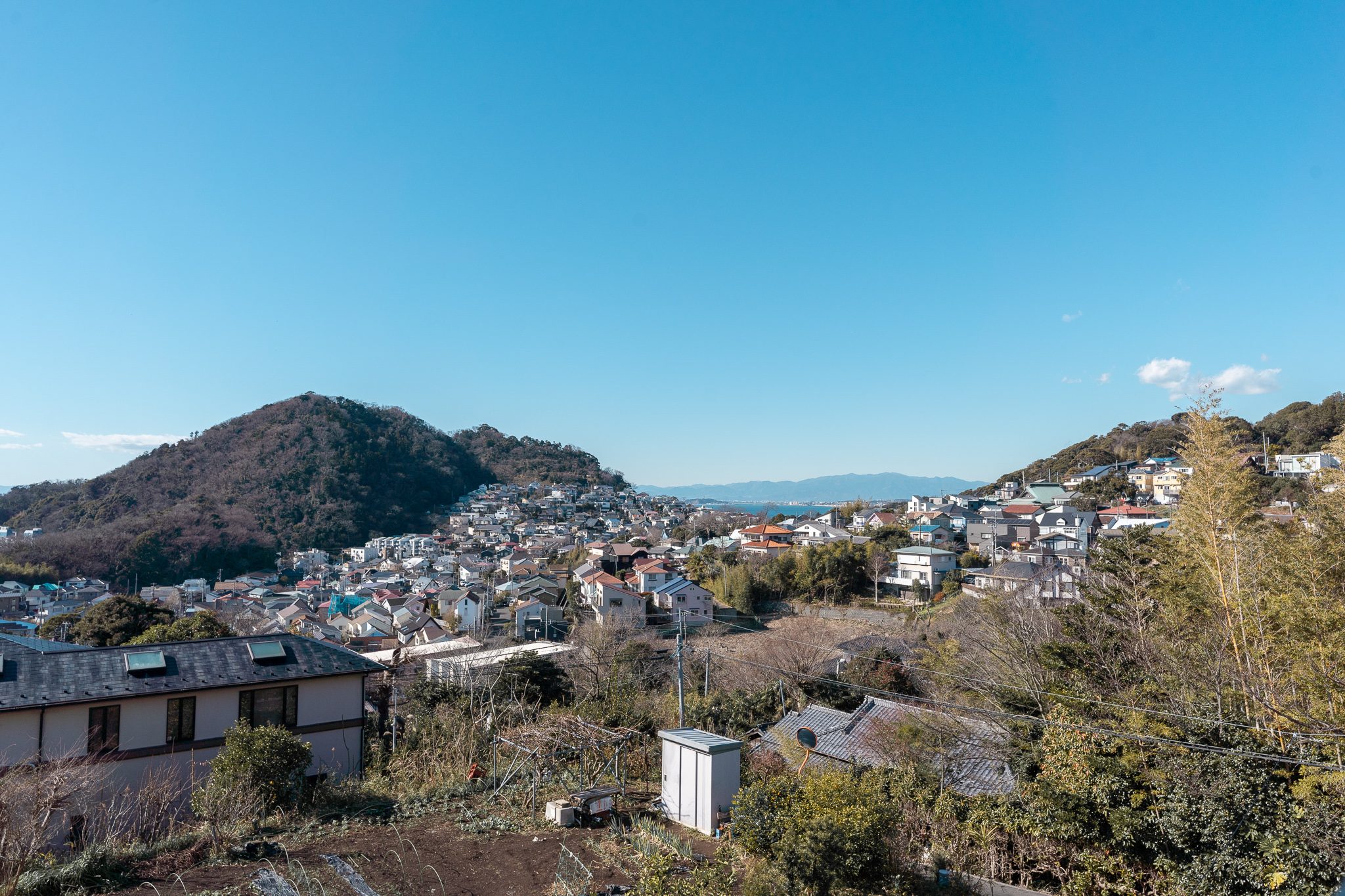
Roopt Shiogama Kaigan-dori is a 4-story share house located about 30 minutes by train or car from Sendai Station, and a 1-minute walk from Hon-Shiogama Station on the JR Senseki Line. The 2nd floor has a common space and rooms for vacation rentals, and the 3rd and 4th floors have a total of 5 private rooms for share house residents. It's a place where you can experience Shiogama's "artistic" atmosphere, with bookshelves utilizing the stair steps, a tricolor painted ceiling, and tatami mats that became waste material during renovation embedded in the walls.
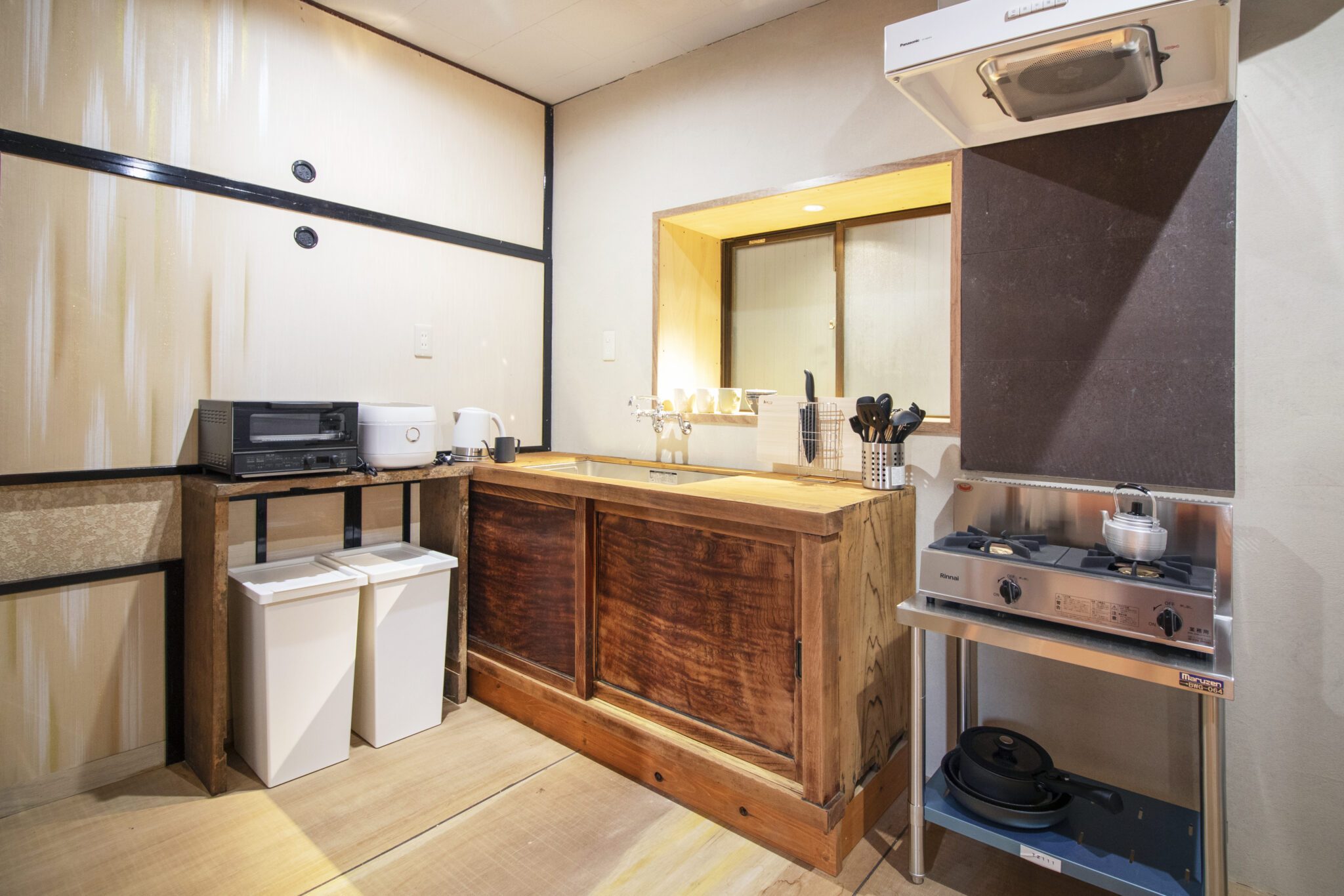
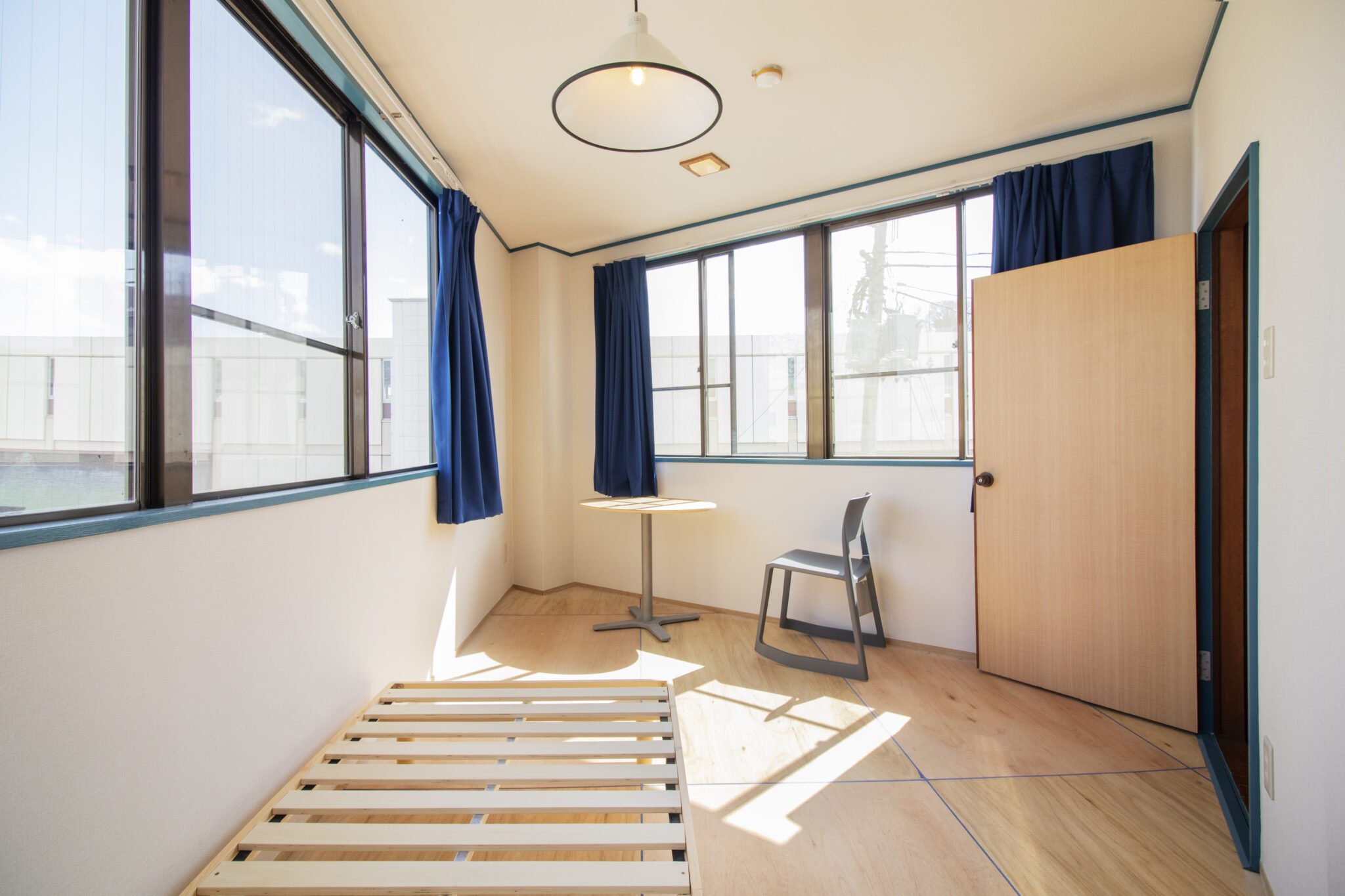
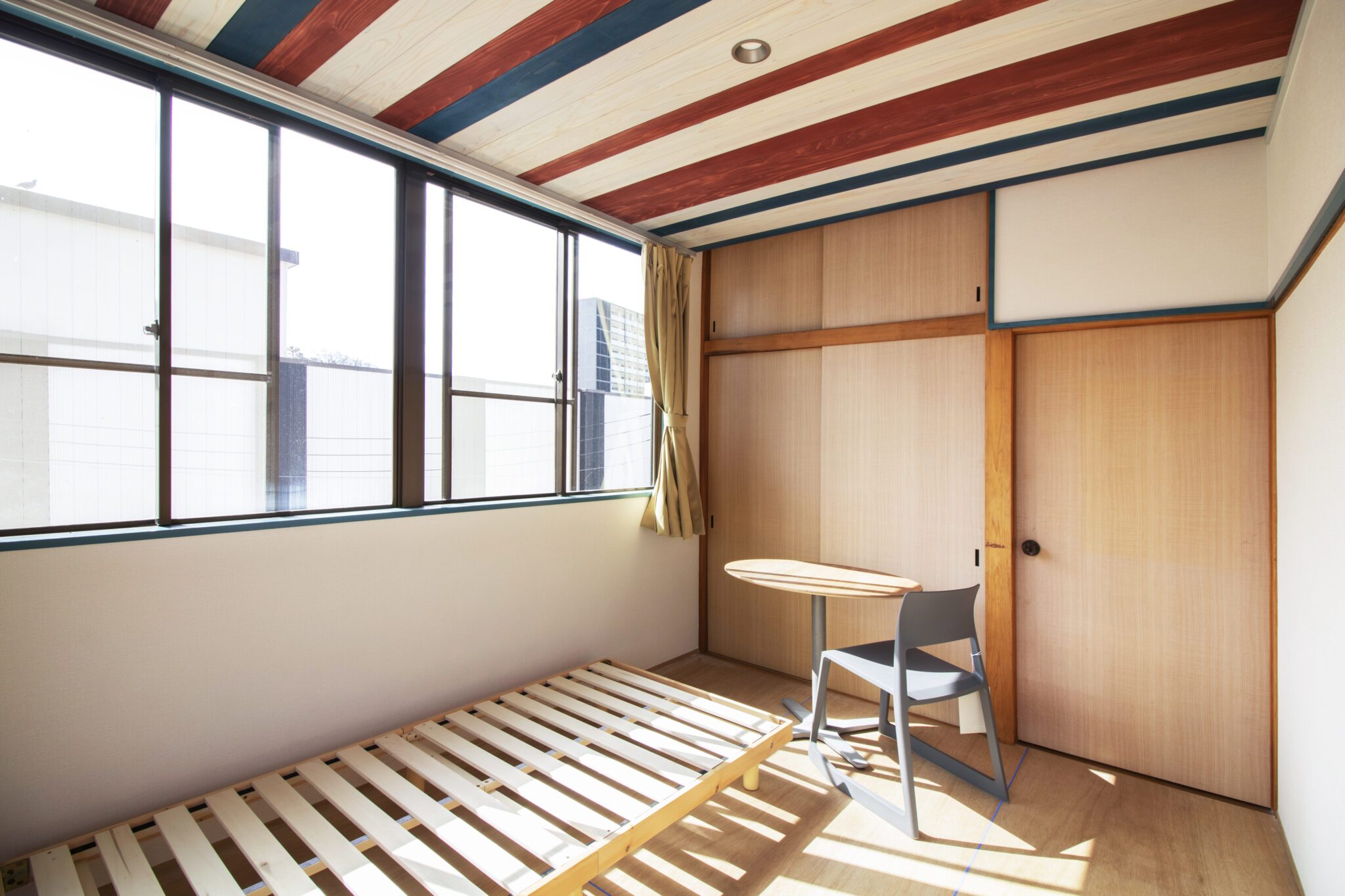
If you would like to know more about Roopt Shiogama Kaigan-dori, please see this share house information page.
The first half of the event, a talk session, proceeded with Kyoko Watanabe, CEO of Makigumi Inc. and owner of the "Roopt" share house, as moderator, asking questions to guest Mr. Monou.
First, we asked about co-working space information around Sendai and the communities Mr. Monou himself is involved in and operates.
Watanabe: Mr. Monou, I strongly associate you with the operation of places like THE6 (a shared office and co-working space in Sendai City). Could you tell us what led you to start such work?
Monou: When THE6 was launched, the operating company had a problem: "We're good at construction, but not good at fostering communication among residents." They reached out to me, saying, "We need someone to manage the space," and that's how it started. I used my experience managing public facilities during my NPO days to liven up the space.
Watanabe: I imagine the residents vary depending on the location, but what do you think is the fundamental significance of "sharing"?
Monou: Of course, there are economic benefits like lower rent, but more importantly, it's about the creation of new value that didn't exist before.
Watanabe: Could you explain that a bit more concretely?
Monou: For example, if a company wants to create a new sign and is looking for a designer. Even if they wouldn't normally connect, they might meet precisely because it's a shared office. And even if they don't know each other yet, by connecting them, new work orders, projects, and so on can emerge. I believe that's the great value of sharing.
Watanabe: So, it really comes down to the people, doesn't it?
Monou: That's right. Just having good facilities isn't very appealing; people are more likely to gather and feel secure if they know "who is there."
Watanabe: The same could probably be said for Roopt. Have there been any interesting incidents during your time managing these spaces?
Monou: Yes, there have. There was a resident at THE6 who loved making cakes, and before I knew it, they had connected with the neighborhood association and ended up setting up a stall at the town festival. Or, residents created a local map of the area around THE6 together, and through that process, relationships with nearby shops were formed.
Watanabe: It's amazing how residents proactively connect with the community!
Watanabe: Let's talk about the main topic, "Daydreaming in a Share House." You visit Shiogama frequently, so I'd like to hear about interesting spots in Shiogama from your perspective.
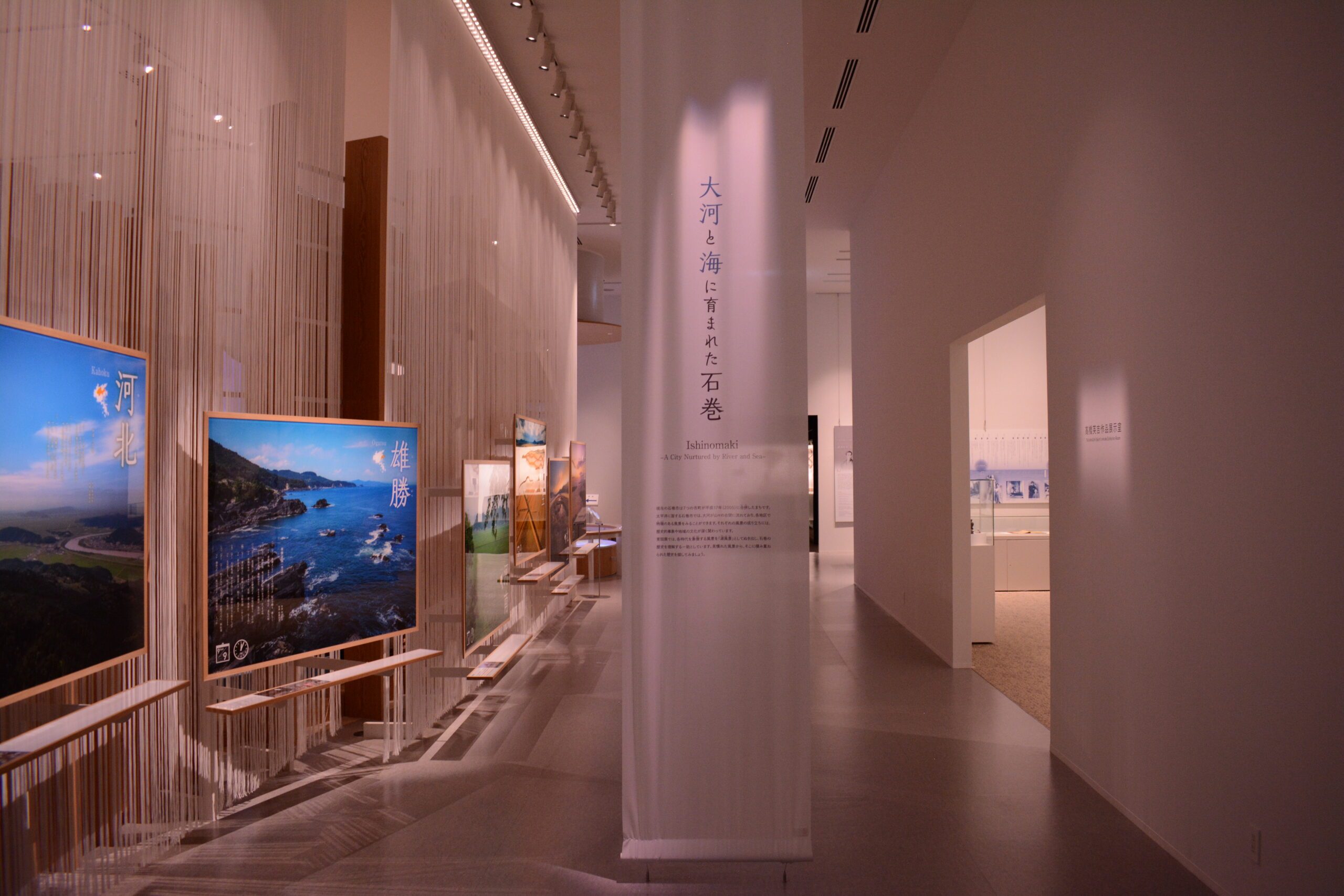
Monou: There are many! There are cultural facilities like the Shiogama City Sugimura Jun Museum of Art, which is designated as a municipal tangible cultural property, and the Nagai Katsuichi Manga Museum, which honors Katsuichi Nagai, who served as editor-in-chief of the manga magazine 'Garo.' There's also a sake brewery where you can sample Miyagi's famous sake, 'Urakasumi.'
Watanabe: Shiogama has many cultural places, doesn't it?
Monou: It really does. Actually, haiku is also famous in Shiogama, and I learned from the renowned haiku poet Seiichiro Watanabe (from Shiogama) at a 'Haiku Club' and cried while writing haiku (laughs).
Watanabe: You received loving guidance (laughs). If you, Mr. Monou, who are so knowledgeable about Shiogama's culture, were to live in Roopt Shiogama Kaigan-dori, what kind of things would you want to do?
Monou: Utilizing its location, just a minute's walk from the station, we could even run a "self-proclaimed tourist association."
Watanabe: A self-proclaimed tourist association...?
Monou: For example, residents could create a "love map" introducing their favorite local shops from their own perspective, saying things like, "I love this aspect of this confectionery," and make it open to people using Hon-Shiogama Station. By doing so, connections with locals and tourists could be formed, and it could function like a tourist information center. So, it might be interesting if people in creative fields like video, design, or writing were to move in.
FIND YOUR STAY
Feel free to contact us for accommodation booking inquiries, residency consultations, viewing appointments, media coverage, etc.
Contact Us