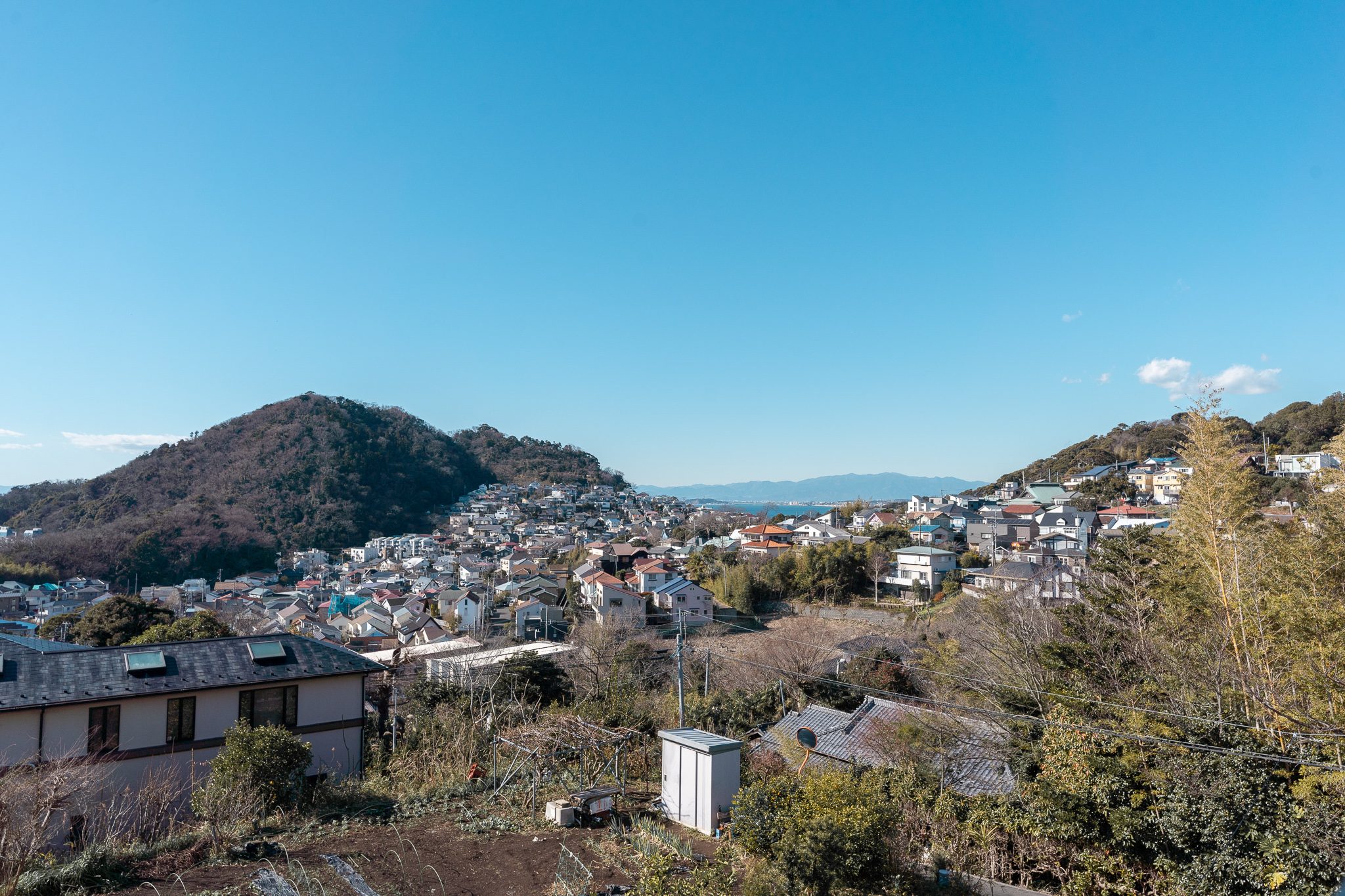
Shiogama City is the second smallest municipality in Miyagi Prefecture. However, it boasts the longest history among cities in Tohoku, and tracing its history back, it played a politically and economically important role as a military and commercial port. In the Heian period, it was famous as a utamakura (a place name used in waka poetry) for aristocrats, and Minamoto no Tōru, said to be the model for Hikaru Genji, was captivated by and loved Shiogama's beautiful scenery. In this column, we will introduce tourist spots in Shiogama, a place full of such famous sites. Why not stroll through the city and feel the townscape and atmosphere loved by historical figures?
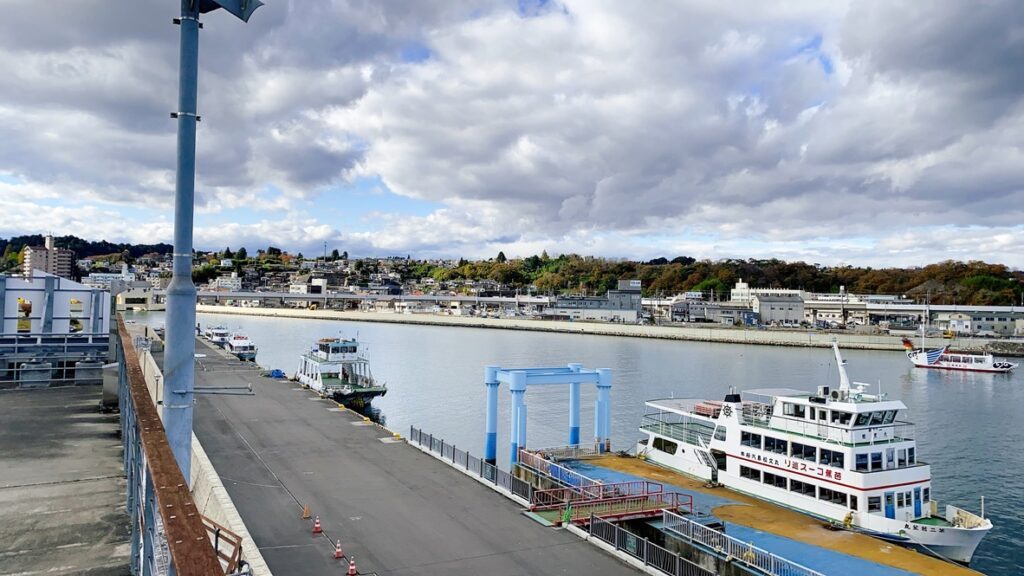
This is the terminal for sightseeing cruises from Shiogama to Matsushima and regular ferries to the Urato Islands. Established in 1996, it has been bustling with citizens and tourists alike. The facility is well-equipped with a restaurant area where you can enjoy seasonal seafood while overlooking the port, a direct sales shop for marine products, and souvenir shops, making it a convenient stopover for sightseeing. On the rooftop, there is an observation deck offering panoramic views of the port, the Shiogama cityscape, and Matsushima. The Marine Deck, a pedestrian bridge connecting Hon-Shiogama Station to Marine Gate, also offers excellent views of the port and is recommended for night viewing.
An archipelago consisting of islands such as Nonoshima, Katsurashima, Kanpuzawajima, and Hojima, scattered across Matsushima Bay. On these islands, rich in nature and surrounded by beautiful seas, "island hopping" by ferry to visit each island is a popular sightseeing style. Katsurashima: Swimming beach; Nonoshima: Camellia tunnel walks and lavender viewing; Kanpuzawajima: Historical site tours; Hojima: Rapeseed flower field viewing, and many other highlights. If you have a full day, you can fully enjoy the activities on each island.
The closest island to Marine Gate Shiogama is Katsurashima. It is an island with a population of 200, located about 20 minutes by boat from Marine Gate Shiogama. It's a perfect spot for a date, or simply to enjoy the ocean view alone for a change of pace. There are hiking trails on the island, where you can fully enjoy the magnificent nature of the observation deck and Katsurahama.
There are fishing spots scattered throughout the island, so fishing enthusiasts can enjoy island time along the coast of the island surrounded by the sea.
This is Miyagi's representative wholesale market, with about 100 shops lining a vast sales floor of nearly 5,000 square meters. The lively market offers a wide variety of ingredients, including fresh tuna and other seafood from Sanriku, salted and dried processed foods, delicacies, dried goods, and frozen foods, all available at wholesale prices. Professional chefs and local shop owners also come here to purchase goods, creating a bustling atmosphere from morning until early afternoon.
Inside the market, a rice and miso soup set is sold for 400 yen, but here's a secret tip. Buy your favorite seafood at the market and combine it with white rice right there... and you'll have your own original seafood bowl! The author enjoyed a delicious combination of sea urchin and tuna.
Shiogama, which flourished as a temple town (monzenmachi) of Shiogama Shrine, attracted many worshippers, and it is said that the quality of sake was refined due to the large consumption of sake.
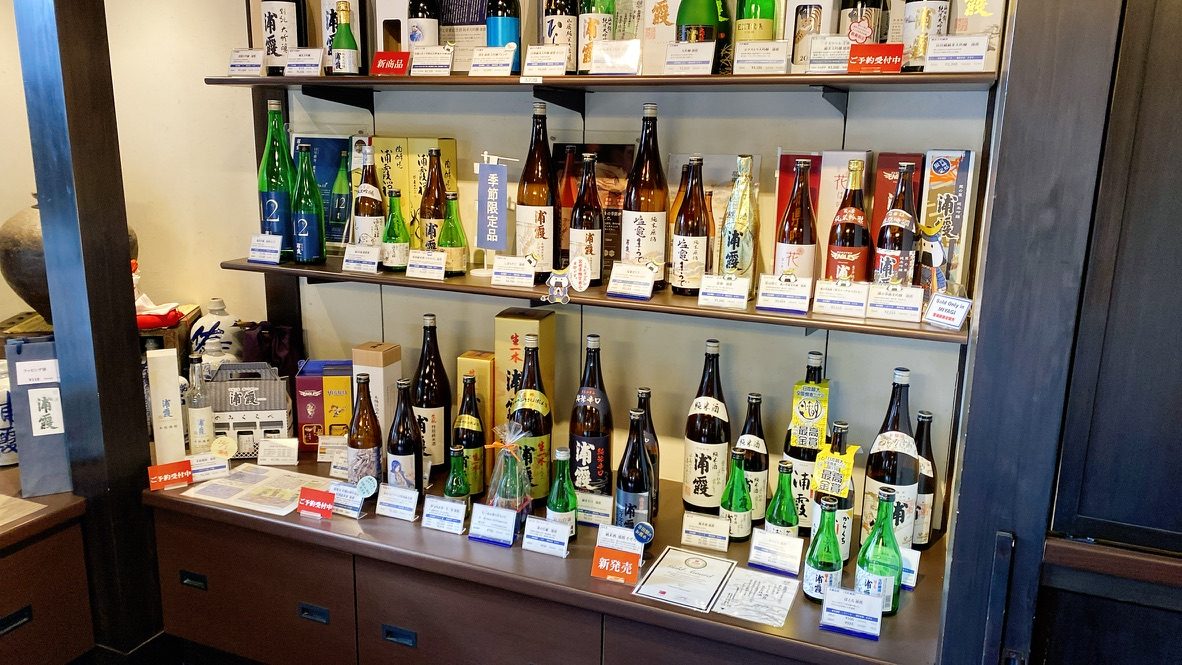
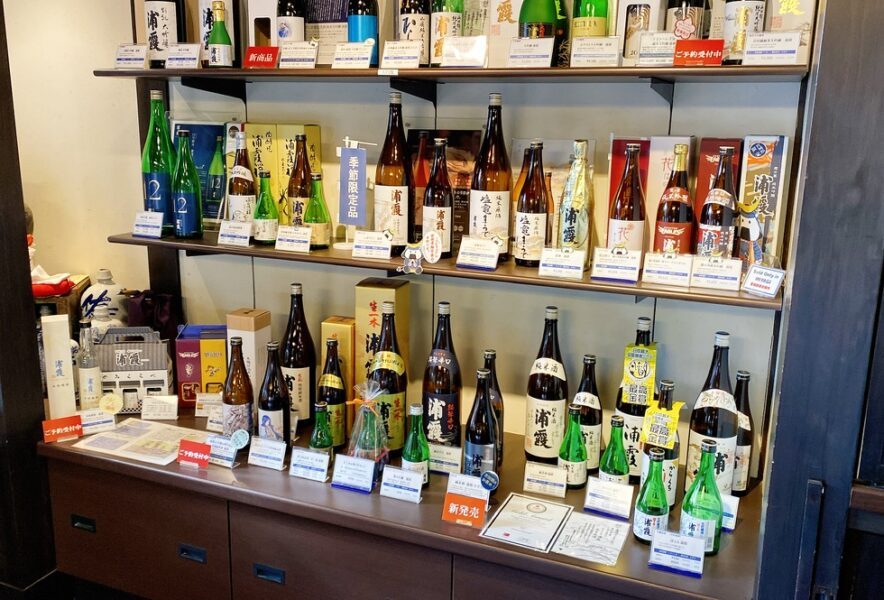
The brewery, Saura, dates back to 1724 (Kyoho 9), 300 years ago, and since then, they have been dedicated to brewing high-quality sake as the purveyor of sacred sake to Shiogama Shrine. At the store, they display and sell Urakasumi products exclusive to Miyagi Prefecture, as well as ceramic and glass sake vessels.
Urakasumi was not brewed from the very beginning of the Edo period. Its birth was in 1925, at the end of the Taisho era. It was the name of the sake presented to Emperor Showa during his regency when he visited, and it was named by taking the characters "Ura" and "Kasumi" from Minamoto no Sanetomo's waka poem: "The pine breeze of Shiogama's Ura is hazy, spring must be arriving over the many islands." It is said to have been named with the wish that people would enjoy a pleasant intoxication like the spring haze.
"Junmai Ginjo Urakasumi Zen," with its harmonious blend of gentle aroma and the umami of rice, is a renowned sake representing Miyagi. It's a food-friendly sake that you won't tire of, and according to the staff, it pairs exceptionally well with white fish, vegetables, and cheese! Sake lovers should definitely give it a try. There's also a rich selection of seasonal limited editions, and you can enjoy brewery tours and sake tasting (※).
Brewery Tour: Held twice a day. Takes about 15 minutes, where staff guide you through the brewery buildings and history from the exterior. Sake Tasting Counter: Purchase an original Urakasumi sake cup (300 yen) to enjoy monthly rotating sake for tasting. *Currently suspended during the COVID-19 period.
The most historic spot in Shiogama. Shiogama Shrine has a long history of over 1200 years, and since the Heian period, it has been regarded as the shrine with the highest status in Mutsu Province.
The current Shiogama Shrine was begun to be rebuilt by Date Tsunamura, the 4th lord of the Sendai Domain, and later completed by Date Yoshimura, the 5th lord. Its main hall and worship hall are designated as National Important Cultural Properties.
Shiogama Shrine, affectionately known as "Shiogama-sama," is famous for bestowing blessings for "maritime safety," "bountiful catches," and "safe childbirth." It attracts a large following as one of Miyagi Prefecture's premier power spots, and many visitors come to pray for safe childbirth.
The large torii gate at the entrance was dedicated to commemorate the reconstruction by Date Tsunamura, the 4th lord of the Sendai Domain. The Omotezaka (front slope) visible beyond the torii is famous for its 202 stone steps, and the stones for its construction were reportedly transported about 100 km from Ichinoseki in Iwate Prefecture. During annual events, a mikoshi (portable shrine) weighing a staggering 1 ton is carried up this Omotezaka.
From the shrine grounds, you can enjoy a panoramic view of the Shiogama cityscape and Matsushima. This scenery became widely known as a "utamakura" (a place name used in waka poetry) by prominent figures of the Heiankyo, including Minamoto no Tōru and Murasaki Shikibu, and many poems were composed about it. It is evident that it has continued to captivate people's hearts since ancient times.
The first shrine in Japan where salt was made. It is also the origin of the place name "Shiogama." It is a subsidiary shrine (massha) of Shiogama Shrine, enshrining the deity Shiotsuchi-no-Oji-no-Kami, who taught how to make salt. Matsuo Basho, a haiku poet from the Edo period, also visited Okama Shrine and recorded his experiences there in "Oku no Hosomichi." The "Moshioyaki Shinji" (seaweed salt burning ritual) held every July is a ritual designated as an Intangible Folk Cultural Property of Miyagi Prefecture. You can actually observe the process of burning seaweed salt in a cauldron, so please see the traditional salt making with your own eyes.
How was it? Shiogama, which flourished as a salt-producing region since ancient times and was bustling commercially and politically, is packed not only with fresh seafood but also with historic buildings and the culture that accompanies them. In addition to these, you can encounter the history of town development everywhere in Shiogama. Please enjoy each of the tourist and historical spots.
FIND YOUR STAY
Feel free to contact us for inquiries about accommodation reservations, move-in consultations, viewing appointments, media coverage, etc.
Contact Us